Going solar in Connecticut: Costs, incentives and what homeowners should know
Quick answer: Connecticut can be a strong state for residential solar because many homeowners face high electricity costs while still having access to state and utility solar programs. Whether solar makes sense depends on your roof, electricity usage, payment option, utility provider and long-term goals.
If you own a home in Connecticut, going solar is not just about installing panels on your roof.
It is about understanding your electric bill, your roof, your utility program, available payment options and the long-term cost of staying fully dependent on the grid.
Whether you live in Cheshire, Hartford, New Haven, Stamford, Waterbury or another Connecticut community, the best solar decision starts with knowing how the process works and what factors matter most.
Why Connecticut homeowners consider solar
Connecticut homeowners often start researching solar because electric bills feel high or unpredictable.
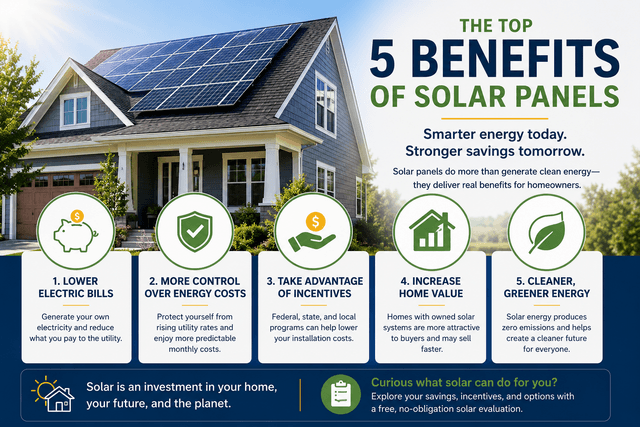
Solar gives homeowners a way to produce some of their own electricity instead of buying all of it from the utility company. That can make solar especially appealing for households looking for more long-term energy control.
High electricity costs
Solar can help reduce how much electricity your home needs from the grid.
Long-term planning
Many homeowners compare solar against years of future utility bills.
State solar programs
Connecticut has programs that can affect how solar production is credited or compensated.
Energy independence
Solar can help homeowners rely less on utility-generated electricity.
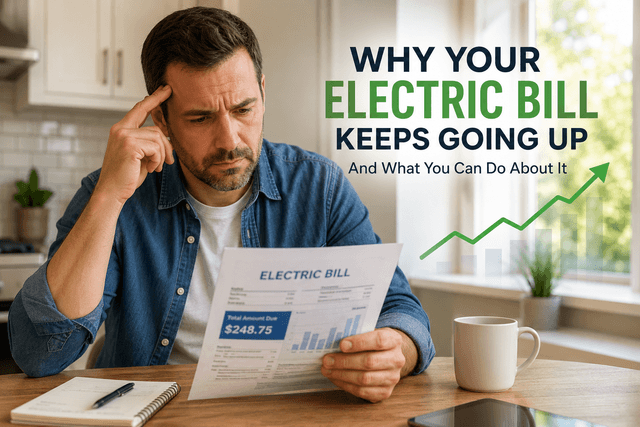
If your main concern is rising electricity costs, our guide on why your electric bill keeps going up explains the larger forces behind higher utility bills.
How solar works in Connecticut
Residential solar in Connecticut works the same basic way it does in other states.
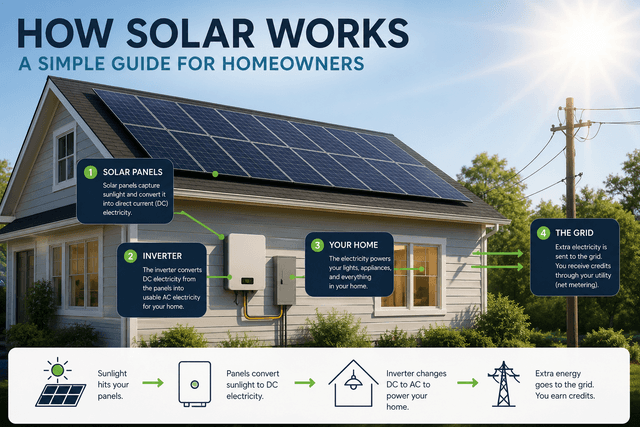
Your panels capture sunlight, your inverter converts that energy into usable electricity and your home uses the solar power first. Depending on your system and utility program, extra energy may be sent to the grid, credited or compensated.
Simple process:
1. Sunlight hits your solar panels.
2. Panels produce electricity.
3. Your home uses that electricity first.
4. Extra solar production may go to the utility grid.
5. Your utility program determines how that extra production is handled.
If you are new to solar, our guide on how solar works gives a simple breakdown of panels, inverters, the grid and your home.
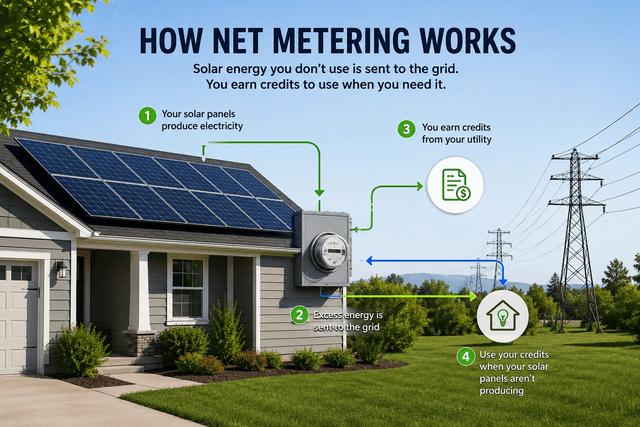
For solar credits specifically, read our guide on what net metering is.
Connecticut solar programs and incentives
Connecticut’s solar landscape has changed over time. The state no longer uses traditional residential net metering for most new solar systems. Instead, eligible homeowners generally participate through Connecticut’s Residential Renewable Energy Solutions program, often called RRES.
| Program or benefit | What it means for homeowners |
|---|---|
| Residential Renewable Energy Solutions program | Connecticut’s main residential solar compensation program. |
| Netting tariff | Your home uses solar first, and excess production can earn credits. |
| Buy-all tariff | All solar production is sold to the utility at a set compensation rate. |
| Sales tax exemption | Qualifying solar systems may be exempt from Connecticut sales tax. |
| Property tax exemption | Solar may increase home value without increasing property tax assessment from that added solar value. |
For a deeper explanation of available programs, see our guide to Connecticut solar incentives.
What happened to the federal solar tax credit?
The federal Residential Clean Energy Credit was one of the most important solar incentives for homeowners. However, current IRS guidance says the credit is not available for residential clean energy property placed in service after December 31, 2025.
Important: Homeowners should not assume a 30% federal tax credit applies to a new 2026 solar installation. Tax rules can change, and eligibility should be reviewed with a qualified tax professional.
For more background, review our article on the Federal solar tax credit.
How much does solar cost in Connecticut?
The cost of solar in Connecticut depends on the home.
System size, roof layout, electric usage, equipment, payment option and utility requirements can all affect pricing. That is why broad averages can be helpful for early research, but they are not enough to make a decision.
Electric usage
Homes that use more electricity may need larger systems.
Roof layout
Direction, shade, pitch and usable space affect production.
Payment option
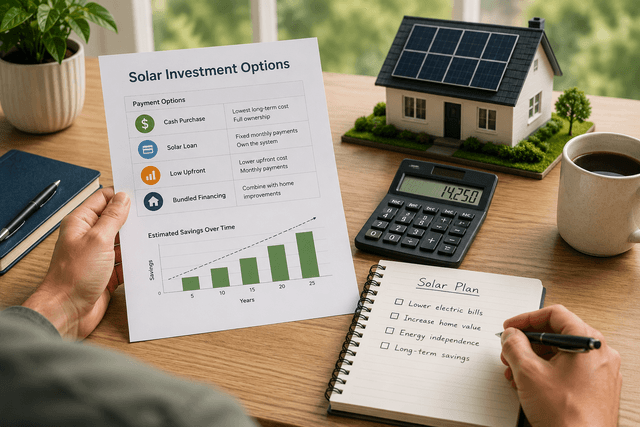
Cash purchase, financing and low upfront cost options can change the monthly picture.
Utility program
RRES options can affect how solar production is valued.
For more detail, read our article on how much Trinity Solar costs.
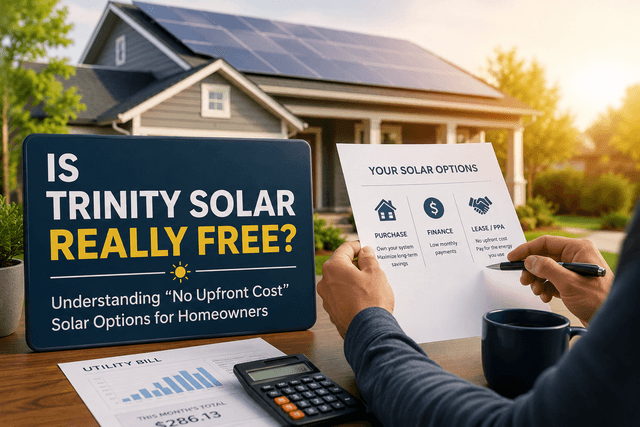
If you are comparing monthly affordability, our guide to solar payment options explains how homeowners evaluate upfront cost, financing and long-term value.
Is solar worth it in Connecticut?
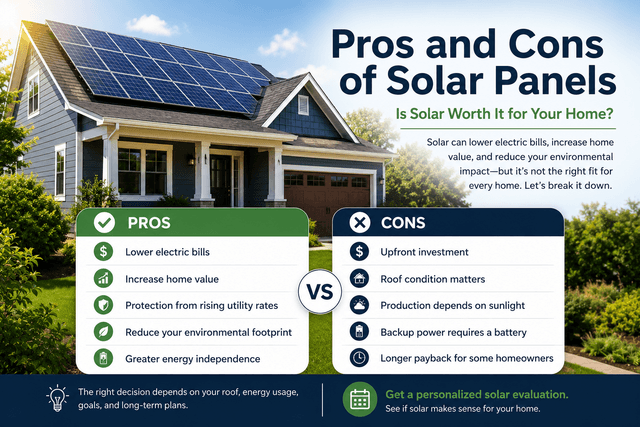
Solar may be worth considering in Connecticut if your home has strong sun exposure, suitable roof space and electricity usage that can be meaningfully offset by solar production.
The decision also depends on your timeline in the home and how you think about future utility costs.
| Solar may make sense if... | You may need a closer review if... |
|---|---|
| Your electric bill is consistently high | Your electricity usage is very low |
| Your roof gets good sunlight | Heavy shade limits solar production |
| You plan to stay in the home long term | You plan to move soon |
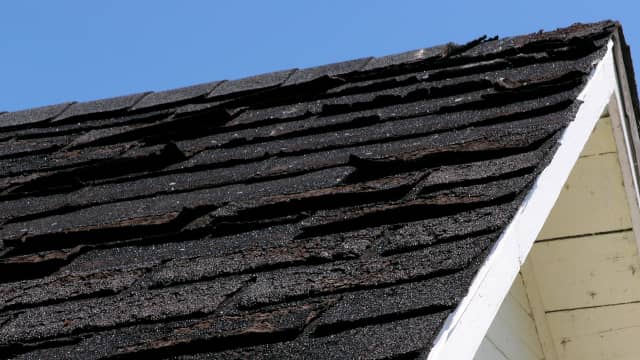
| Your roof is in good condition | Your roof may need replacement soon |
For a long-term comparison, read our guide on solar vs. utility costs.
Connecticut roof checklist before going solar
Your roof plays a major role in whether solar makes sense.
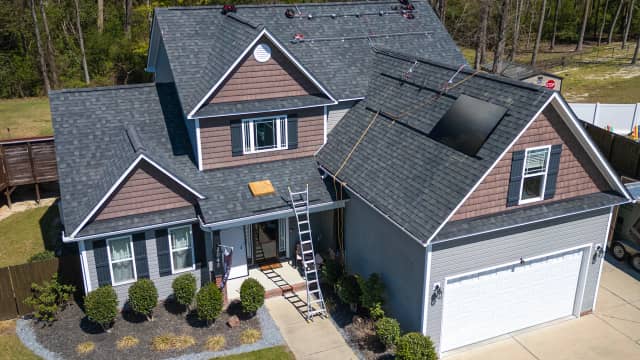
Before installation, a solar evaluation should review the age, condition, orientation and usable space on your roof.
Roof factors to review:
1. Is the roof in good condition?
2. Does the roof have enough usable space?
3. Is there heavy shade from trees or nearby buildings?
4. Does the roof direction support strong solar production?
5. Would roof work be needed before panels are installed?
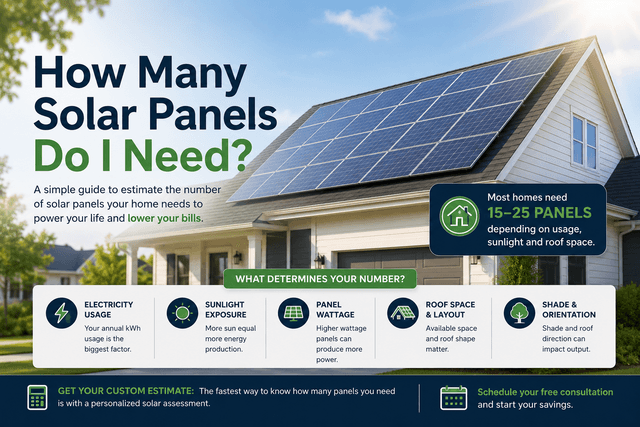
If you are wondering how roof space affects system size, our guide on how many solar panels you need can help explain the relationship between usage, roof space and production.
Do solar panels work in Connecticut weather?
Yes. Solar panels can work in Connecticut’s seasonal climate.
Solar production is usually highest during sunnier months, but modern solar panels can still produce electricity during colder weather and on cloudy days. Snow, shade and shorter winter days can reduce production, but they do not automatically make solar a poor fit.
The better question is how much electricity your home can produce across the full year.
Our guide on how much power solar panels produce explains the main factors that affect output.
Should Connecticut homeowners consider battery storage?
Battery storage is becoming more common as homeowners think about outages, grid reliability and backup power.
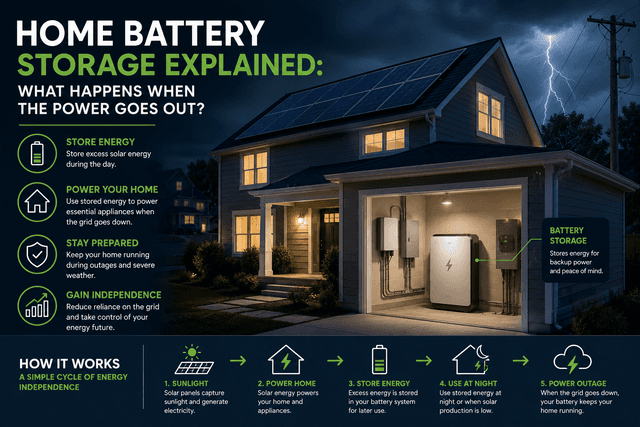
A battery can store electricity for later use and may help power selected parts of your home during an outage, depending on the system design.
Batteries are not necessary for every solar project, but they may be worth exploring if backup power or energy resilience is a priority.
For more, read our guide on home battery storage.
Why choose Trinity Solar in Connecticut?
Choosing a solar company in Connecticut is not only about panels. It is about working with a team that understands your home, your utility program and the local process.
Connecticut experience
Local solar experience matters when dealing with utility requirements and town-level processes.
Home-specific evaluations
Your quote should be based on your roof, usage and goals.
Program guidance
Connecticut’s RRES options and utility rules can affect the decision.
Long-term support
Solar is a long-term home energy investment, not a one-day project.
Connecticut areas Trinity Solar serves
Trinity Solar serves homeowners across Connecticut, including many of the state’s largest communities and surrounding areas.
- Cheshire
- Hartford
- New Haven
- Stamford
- Waterbury
- Bridgeport
- Norwalk
- Danbury
- New Britain
- Meriden
As more Connecticut location pages are added, these service area connections can help homeowners find more localized solar information.
Next step: See what solar could look like for your home
Every Connecticut home is different.
The best way to understand whether solar makes sense is to compare your roof, electric usage, payment options and available state programs.
A personalized solar evaluation gives you a much clearer picture than relying on statewide averages.
The real question is not just “Should I go solar in Connecticut?”
The better question is how solar would work for your specific home, utility provider, roof and long-term energy goals.
Continue learning
If you are comparing solar options in Connecticut, these guides are a good next step: