How many solar panels do I need? A homeowner’s guide
Quick answer: Most homes need about 15 to 25 solar panels to offset a large portion of their electricity usage. The exact number depends on your annual energy use, roof space, panel output, sunlight, shade and long-term energy goals.
Most homeowners are not really asking, “How many solar panels can fit on my roof?”
They are asking a better question:
How many solar panels will it take to power my home?
The answer depends more on your electricity usage than your home’s square footage. A larger home may need more panels, but two homes of the same size can use very different amounts of electricity depending on appliances, heating and cooling, insulation, family size and daily habits.
This guide explains how solar systems are sized and how to estimate the number of panels your home may need.
How many solar panels does the average home need?
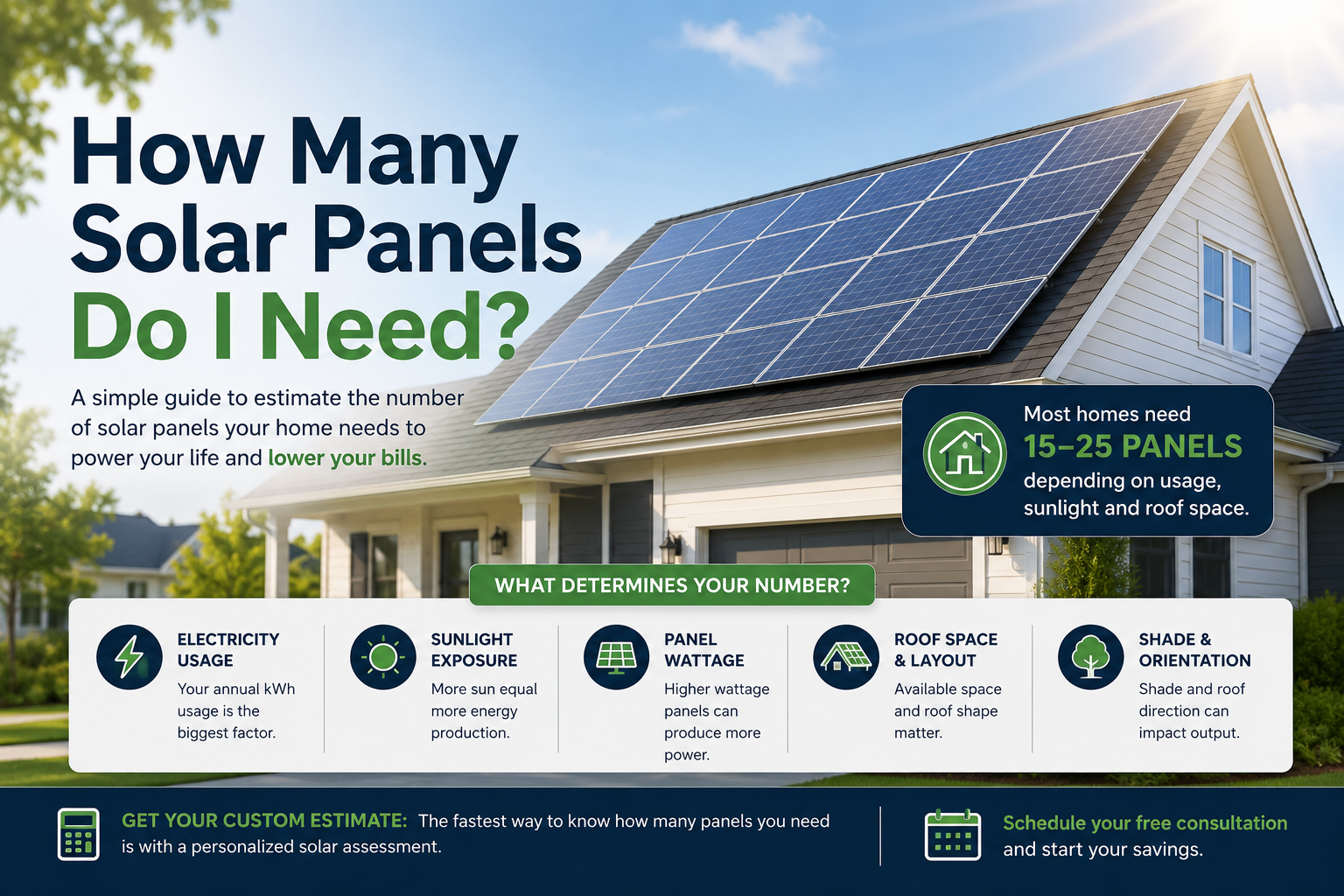
Many homes need between 15 and 25 solar panels, but that is only a general range.
Your actual number depends on how much electricity your household uses and how much power each solar panel can produce.
| Home size | Estimated monthly usage | Estimated panel range |
|---|---|---|
| 1,000 sq. ft. | 500 to 700 kWh | 10 to 14 panels |
| 1,500 sq. ft. | 700 to 900 kWh | 14 to 18 panels |
| 2,000 sq. ft. | 900 to 1,200 kWh | 18 to 24 panels |
| 2,500 sq. ft. | 1,200 to 1,500 kWh | 22 to 28 panels |
| 3,000+ sq. ft. | 1,500+ kWh | 28 to 36+ panels |
These numbers are only estimates. Home size is a starting point, not the final answer.
Important: Your electric bill is usually more useful than your square footage. The best solar system size is based on how much electricity your home actually uses.
What determines how many solar panels you need?
The number of panels your home needs depends on several factors working together.
Electricity usage
Your annual kWh usage is usually the biggest factor in system sizing.
Panel wattage
Higher-wattage panels can produce more electricity per panel.
Roof space
Your roof needs enough usable space for the recommended system size.
Sunlight and shade
Shade from trees, chimneys or nearby buildings can reduce production.
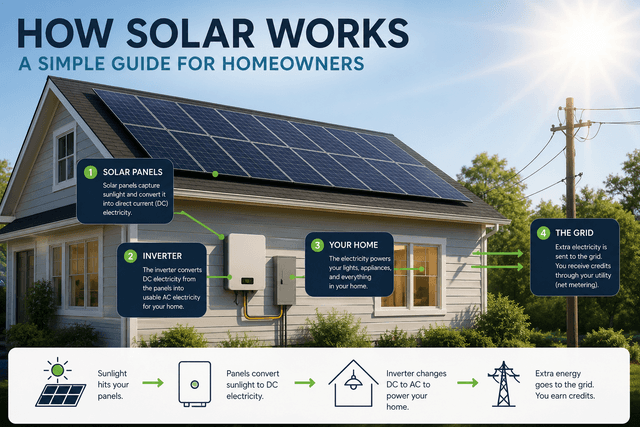
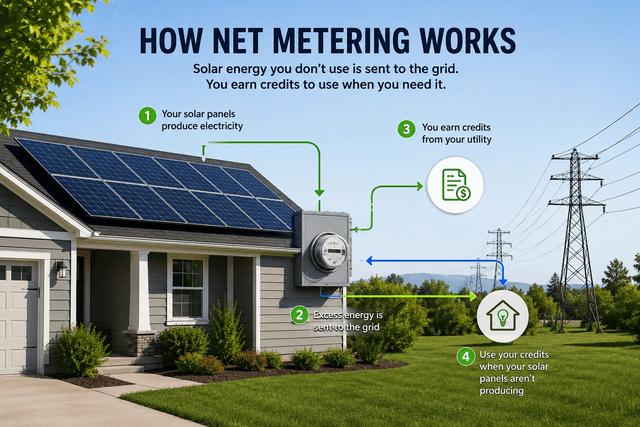
If you are still learning how solar works, our guide on how solar works explains how panels, inverters and the grid work together.
How electricity usage affects solar panel count
Your electricity usage is measured in kilowatt-hours, or kWh.
A kilowatt-hour measures how much electricity your home uses over time. You can usually find your monthly kWh usage on your utility bill.
Basic solar sizing terms:
Kilowatt: The rate electricity is produced or used.
Kilowatt-hour: The amount of electricity produced or used over time.
Peak sun hours: The amount of usable sunlight your panels receive on an average day.
Panel wattage: The power rating of each solar panel.
A home that uses more electricity usually needs more solar panels to offset that usage. That is why an electric bill review is one of the first steps in a solar evaluation.
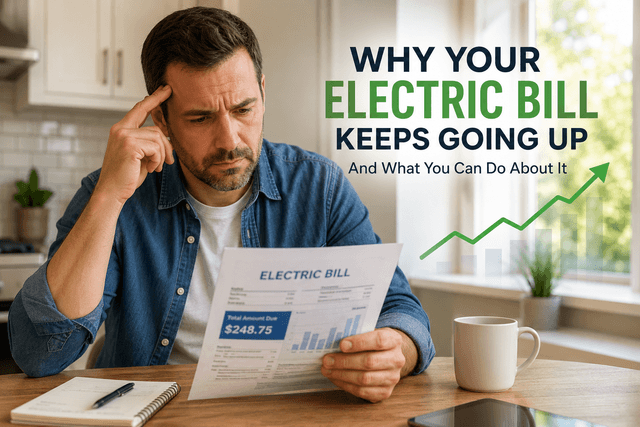
If your electric bill keeps rising, our article on why your electric bill keeps going up explains the larger factors affecting energy costs.
A simple way to estimate how many solar panels you need
You can make a rough estimate by looking at your monthly electricity usage and converting that into a solar system size.
Simple estimate process:
1. Find your average monthly kWh usage on your electric bill.
2. Multiply that number by 12 to estimate annual usage.
3. Estimate how much annual solar production your roof can support.
4. Divide the needed system size by the wattage of each panel.
5. Adjust based on shade, roof layout and local sunlight.
Here is a simple example:
| Estimate step | Example |
|---|---|
| Monthly electricity usage | 900 kWh |
| Estimated daily usage | 900 ÷ 30 = 30 kWh per day |
| Estimated peak sun hours | 4 hours per day |
| Estimated system size | 30 ÷ 4 = 7.5 kW |
| Estimated panel count | 7,500 watts ÷ 400 watts = about 19 panels |
This is only a rough estimate. A professional solar design will also account for roof conditions, panel placement, shading, local weather and utility program rules.
Typical panel counts by annual electricity usage
Another way to think about solar panel count is by annual electricity usage.
| Annual electricity usage | Approximate system size | Estimated panels |
|---|---|---|
| 6,000 kWh | About 5 kW | 12 to 14 panels |
| 9,000 kWh | About 7.5 kW | 18 to 20 panels |
| 12,000 kWh | About 10 kW | 24 to 26 panels |
| 15,000 kWh | About 12.5 kW | 30 to 32 panels |
These ranges assume modern residential panels and average production conditions. Your actual design may vary.
Can your roof fit enough solar panels?
Even if your electric usage suggests a certain system size, your roof still needs to have enough usable space.
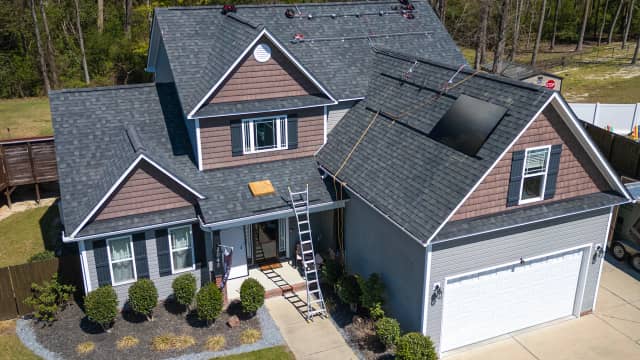
Not every part of a roof can hold panels. Solar designers also need to account for vents, chimneys, skylights, roof edges, shade, roof pitch and local safety requirements.
Usable roof area
Only certain sections may be suitable for panels.
Obstructions
Vents, skylights and chimneys can limit available space.
Shade patterns
Trees and nearby structures can reduce production.
Roof condition
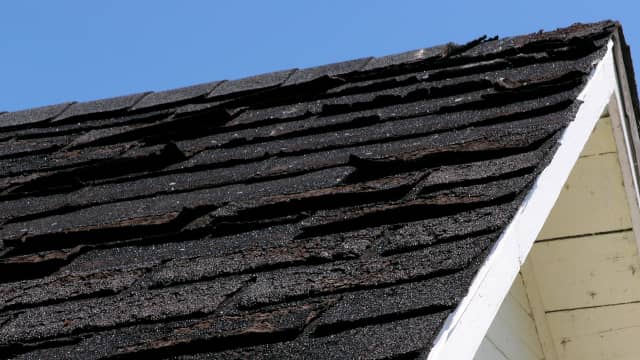
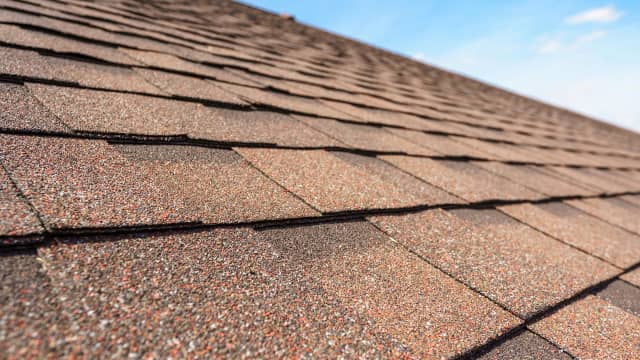
An older or damaged roof may need attention before solar is installed.
If your roof is older, our article on replacing your roof before installing solar explains when it may make sense to handle roofing and solar together.
Does a bigger house always need more solar panels?
Not always.
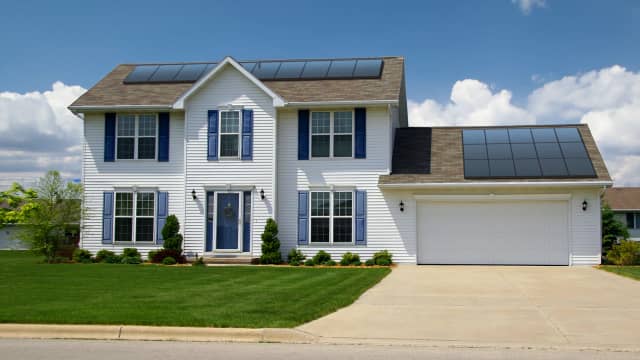
A larger home often uses more electricity, but usage depends on more than size. An efficient 2,500-square-foot home may use less electricity than a smaller home with poor insulation, older appliances or high air conditioning demand.
Common misconception: Bigger house automatically means more panels. In reality, the better indicator is annual electricity usage.
That is why solar estimates should start with your utility bill instead of square footage alone.
Do higher-efficiency panels mean you need fewer panels?
Usually, yes.
Higher-wattage panels can produce more electricity per panel, which may reduce the total number of panels needed. This can matter when roof space is limited.
However, panel count is only one part of system design. Placement, shade, roof layout and production goals also matter.
If your main concern is total production, read our guide on how much power solar panels produce.
What if your roof cannot fit enough panels?
If your roof cannot fit enough panels to fully offset your electricity usage, solar may still be worth exploring.
Some homeowners choose a smaller system that offsets part of their electric bill. Others may review roof work, tree trimming or energy-efficiency improvements before finalizing the solar design.
The right answer depends on your goals. Some homeowners want to offset as much electricity as possible, while others want to reduce utility dependence within the limits of their roof.
How panel count affects solar cost
In general, a larger system with more panels will cost more than a smaller system.
But cost should be compared against energy production, utility bill reduction and long-term value. A larger system may have a higher total cost, but it may also offset more electricity over time.
For a broader pricing breakdown, read our guide on how much Trinity Solar costs.
If you are comparing monthly affordability, our article on solar payment options explains how homeowners evaluate payment structures.
Do you need a battery with your solar panels?
No. Batteries are optional for many solar projects.
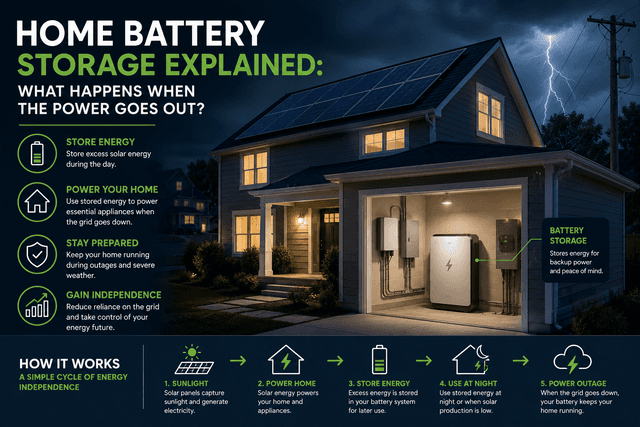
A battery may be worth considering if backup power, outage protection or energy independence are important to you. Without a battery, most grid-connected solar systems do not provide backup power during an outage.
For more detail, read our guide on home battery storage.
The fastest way to know how many panels you need
The fastest way to know how many solar panels your home needs is not measuring the roof yourself.
It is reviewing your electricity usage and pairing that with a roof-specific solar design.
A personalized solar assessment can look at:
- Your annual electricity usage
- Your roof layout and available space
- Shade and sunlight conditions
- Panel wattage and system design
- Utility program rules
- Your long-term energy goals
The real question is not just “How many panels fit?”
The better question is how many panels your home needs to match your electricity usage, roof conditions and long-term energy goals.
Continue learning
If you are estimating your solar needs, these guides are a good next step: