How much does Trinity Solar cost?
Quick answer: The cost of Trinity Solar depends on your home, electric usage, roof layout, system size, payment option and available state or utility programs. The best way to understand cost is to compare your current electric bill, your long-term utility exposure and the solar options available for your specific home.
One of the first questions most homeowners ask is simple:
How much will solar cost me?
The honest answer is that solar pricing is not one-size-fits-all. Two homes in the same neighborhood can need different system sizes, produce different amounts of electricity and qualify for different programs.
That is why a solar quote should be based on your actual home, not a national average.
What affects the cost of Trinity Solar?
The cost of going solar depends on several home-specific factors.
Electric usage
Your current and annual electricity usage help determine how much solar your home may need.
System size
Larger systems generally cost more, but they may also offset more electricity.
Roof layout
Roof direction, pitch, shade and usable space affect system design.
Payment option
Cash purchase, financing and low upfront cost options can change the monthly and long-term picture.
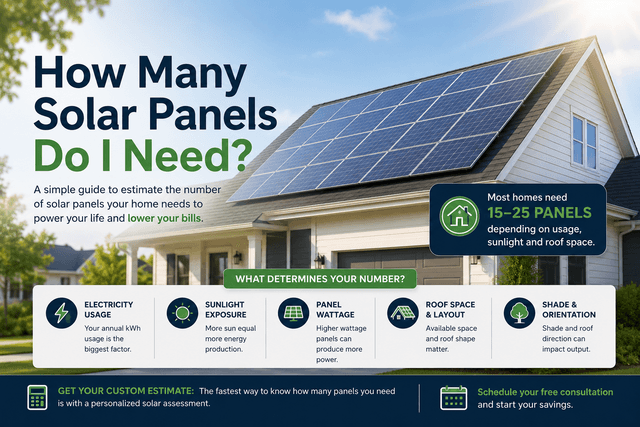
If you are still learning how system size is estimated, start with our guide on how many solar panels you need to power a house.
Why solar cost is different for every home
Solar is not priced like a flat-rate appliance.
A solar system is designed around your home’s electricity usage, roof conditions and energy goals. A home with high electricity usage may need more panels than a home with lower usage. A roof with strong sun exposure may produce more electricity than a shaded roof with the same number of panels.
Simple way to think about it:
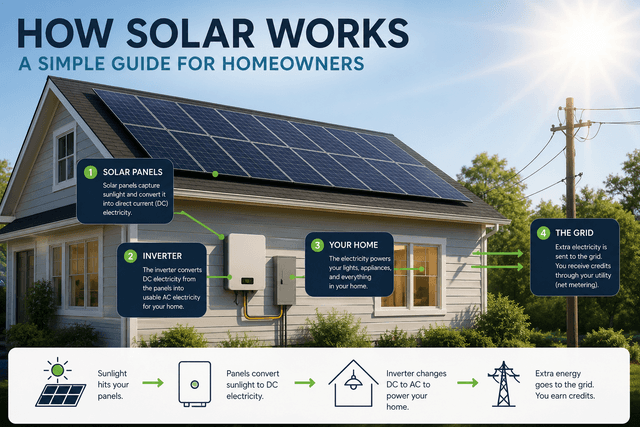
1. Your electric bill shows how much power your home uses.
2. Your roof determines how much solar can realistically be installed.
3. Your utility rules affect how extra solar production is credited.
4. Your payment option affects monthly affordability and long-term value.
5. Your final solar cost depends on how all of those factors work together.
To better understand production, read our article on how much power solar panels produce.
Average solar cost vs. actual solar cost
Online solar cost averages can be useful for general research, but they can also be misleading.
Average costs do not always account for roof conditions, local permitting, utility rules, payment structure, state programs or the actual amount of electricity your home uses.
| Online average | Home-specific quote |
|---|---|
| Based on broad market data | Based on your actual home and usage |
| May not include local requirements | Can account for utility and permitting details |
| May not reflect financing options | Can compare payment structures |
| Helpful for research | Better for decision-making |
That is why the better question is not just “What does solar cost on average?”
The better question is:
What would solar cost for my home, and how does that compare to what I may continue paying the utility?
How payment options affect solar cost
Many homeowners assume solar requires a large upfront payment.
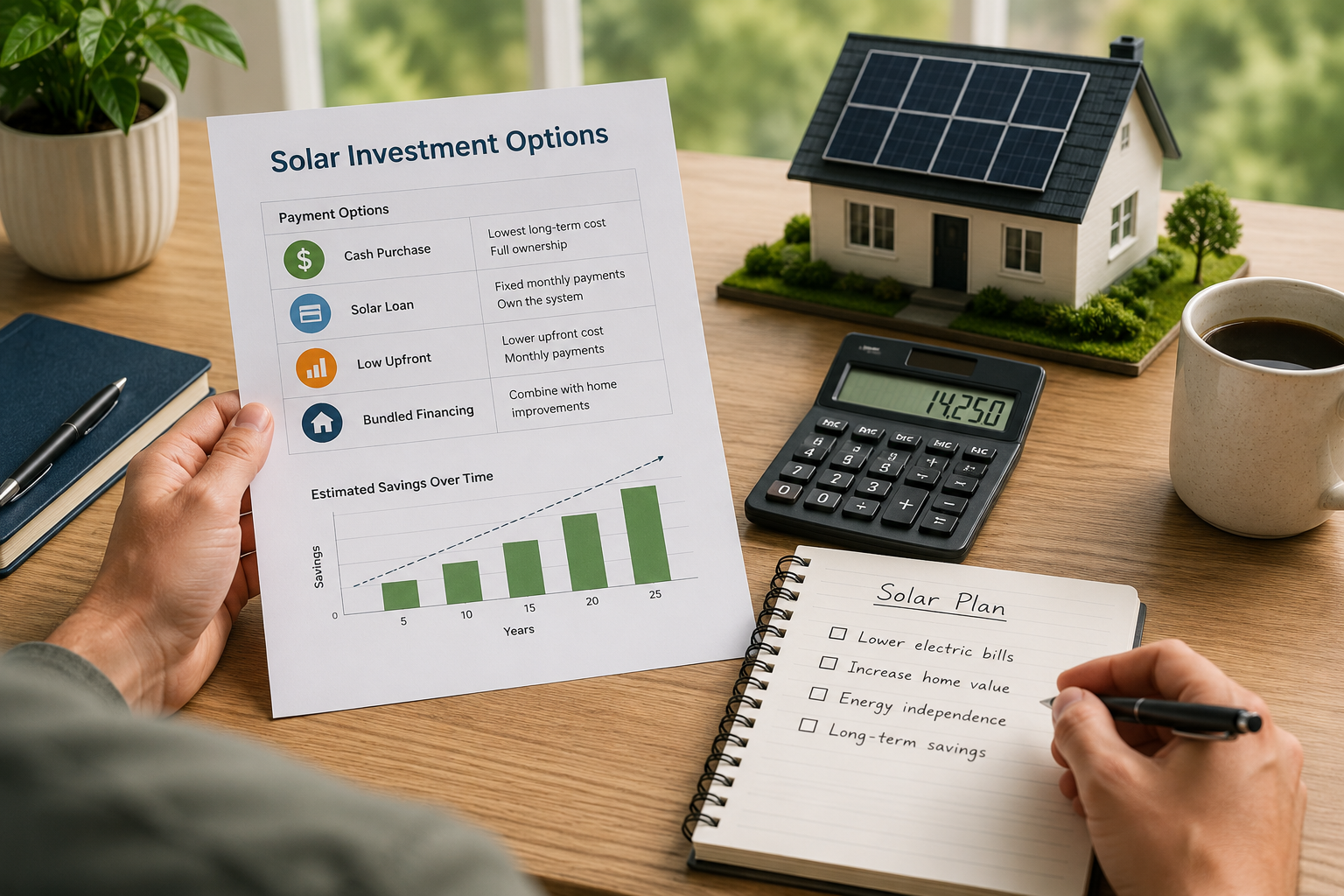
Some homeowners do purchase solar outright, but many evaluate solar through monthly payment options, financing or other programs that reduce the upfront barrier.
| Payment option | How homeowners usually compare it |
|---|---|
| Cash purchase | Higher upfront cost, potential for stronger long-term ownership value. |
| Solar financing | Spreads cost over time and may help compare solar against current utility spending. |
| Low upfront cost options | May reduce the initial barrier to getting started, depending on eligibility. |
For a deeper breakdown, read our guide on solar payment options.
Do incentives lower the cost of Trinity Solar?
Solar incentives and utility programs can affect the financial picture, but they do not all work the same way.
Some programs create tax benefits. Others provide utility bill credits or production-based incentives. Some depend on state rules, utility provider, system design or installation timeline.
Important update: Current IRS guidance says the Residential Clean Energy Credit is not available for property placed in service after December 31, 2025. Homeowners should confirm current tax eligibility with a qualified tax professional.
In Connecticut, eligible homeowners may participate in the Residential Renewable Energy Solutions program, which compensates residential solar owners through tariff-based options. :contentReference[oaicite:1]{index=1}
In New Jersey, homeowners may be eligible for the Successor Solar Incentive program, which was created to support solar generation after the prior Transition Incentive program closed. :contentReference[oaicite:2]{index=2}
For more detail, review our articles on the Federal solar tax credit, going solar in Connecticut and going solar in New Jersey.
How solar credits can affect long-term value
Solar cost is not only about the installation price. It is also about how much electricity your system produces and how that production is valued over time.
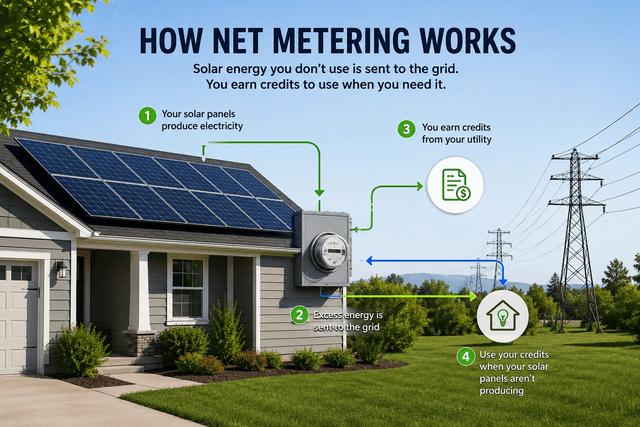
When solar panels produce more electricity than your home needs in that moment, the extra power may be sent to the grid. Depending on your state and utility rules, that energy may create credits that help reduce future utility charges.
That can change the long-term value of solar because your system may help offset electricity beyond the exact hours when the sun is shining.
For a simple explanation, read our guide on what net metering is.
Why utility rates matter when comparing solar cost
Solar cost should not only be compared against today’s electric bill.
It should also be compared against what you may continue paying the utility over the next 10, 15 or 25 years.
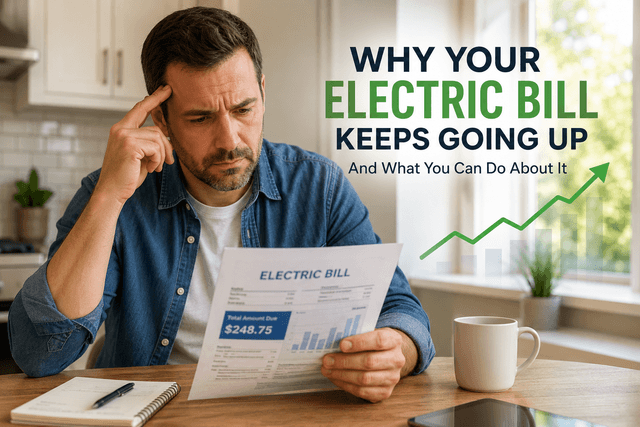
If utility rates rise, the value of producing some of your own electricity may become more important.
When comparing solar, ask:
1. What am I paying for electricity today?
2. How much could utility costs change over time?
3. How much electricity could my solar system produce?
4. What payment option makes sense for my budget?
5. What is the long-term cost of doing nothing?
Our article on solar vs. utility costs explains why many homeowners compare solar against long-term utility exposure, not just one monthly bill.
Does battery storage change solar cost?
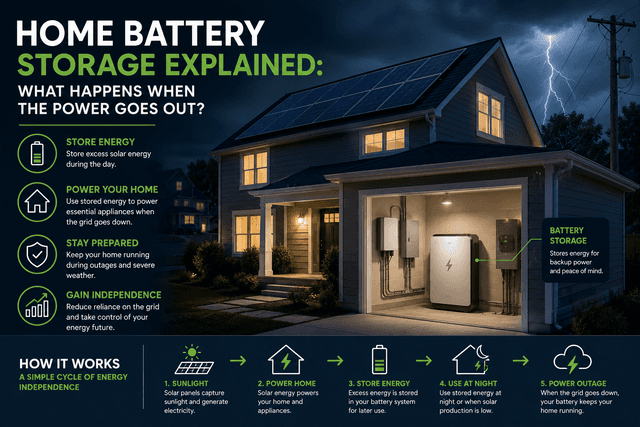
Yes. Adding battery storage can increase the total project cost, but it may also add backup power and energy resilience benefits.
A battery can store electricity for later use and may help keep selected parts of your home running during an outage, depending on system design.
Battery storage is not necessary for every solar project. For some homeowners, solar alone is the first priority. For others, backup power and outage protection are major factors in the decision.
If backup power matters to you, read our guide on home battery storage.
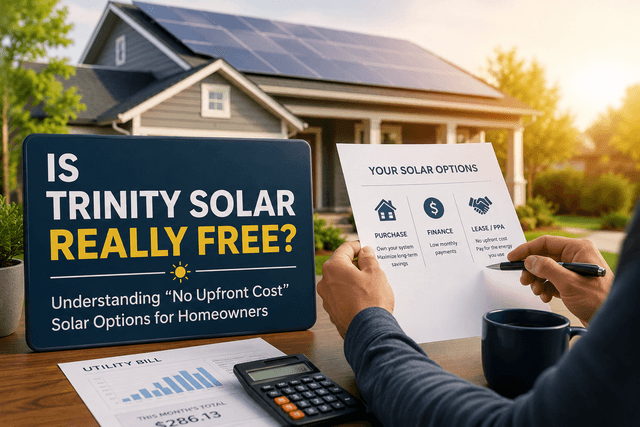
Is Trinity Solar free?
No solar installation should be understood as automatically “free.”
Some homeowners may qualify for low upfront cost options or financing structures that make solar more accessible, but that does not mean there is no cost, no agreement or no long-term financial commitment.
Watch for this: If solar is presented as “free,” homeowners should ask what the payment structure is, who owns the system, what agreement applies and how long the terms last.
The better way to evaluate solar is to look at your current utility bill, available payment options, long-term savings potential and total cost over time.
How to understand your actual solar cost
The most accurate way to understand Trinity Solar pricing is through a home-specific evaluation.
A personalized solar assessment can review:
Your electric usage
How much electricity your household uses throughout the year.
Your roof
Direction, shade, usable space and roof condition.
Your utility provider
Local utility rules, credits and program requirements.
Your payment options
Which monthly or upfront structures may be available.
That is the difference between guessing from an online average and understanding what solar could actually look like for your home.
The real question is not just “How much does solar cost?”
The better question is how solar compares to your current electric bill, future utility costs and long-term energy goals.
Continue learning
If you are comparing solar cost, payment options and long-term savings, these guides are a good next step: