Pros and cons of solar panels: Is solar worth it for your home?
Quick answer: Solar panels can lower electric bills, create more predictable energy costs, increase home value and reduce dependence on the utility grid. However, solar is not the right fit for every home. Roof condition, shading, electricity usage, payment options and long-term plans all affect whether solar makes sense.
Many homeowners are interested in solar but want a clear answer before moving forward:
Are solar panels actually worth it?
The answer depends on your home. Solar can be a strong long-term investment for households with high electric bills, good roof conditions and enough sunlight. But it may be less compelling if your roof needs major work, your electricity usage is very low or you plan to move soon.
This guide breaks down the main pros and cons of solar panels so you can make a more informed decision.
Solar panel pros and cons at a glance
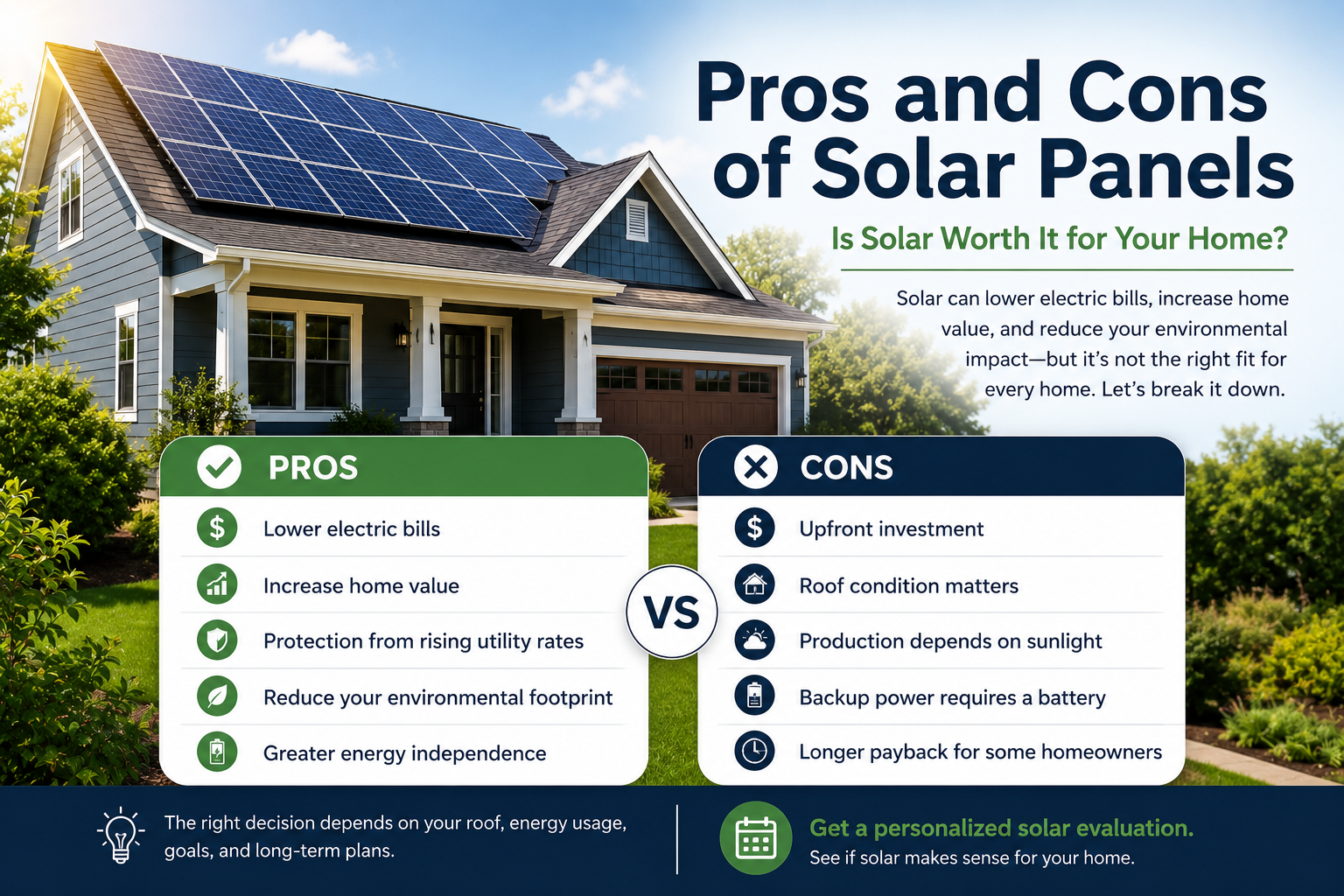
Solar has clear benefits, but it also comes with practical considerations. The best decision comes from looking at both sides.
| Pros of solar panels | Cons of solar panels |
|---|---|
| Can lower electric bills | Not every roof is a good fit |
| Can reduce exposure to utility rate increases | Upfront cost or monthly payment must be considered |
| Can increase energy independence | Production varies by sunlight, shade and roof layout |
| May increase home value | Older roofs may need work before installation |
| Can lower your environmental footprint | Backup power usually requires battery storage |
Benefits of solar panels
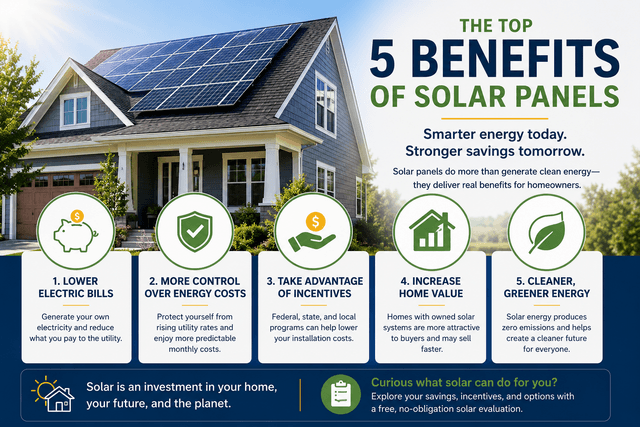
For the right home, solar can provide financial, practical and environmental benefits. The value comes from producing some of your own electricity instead of relying entirely on the utility grid.
Lower electric bills
Solar can reduce how much electricity your home needs to buy from the utility.
More predictable costs
Solar can help reduce exposure to future utility rate increases.
Energy independence
Your home can generate a portion of its own electricity from sunlight.
Environmental impact
Solar can reduce reliance on electricity generated from fossil fuels.
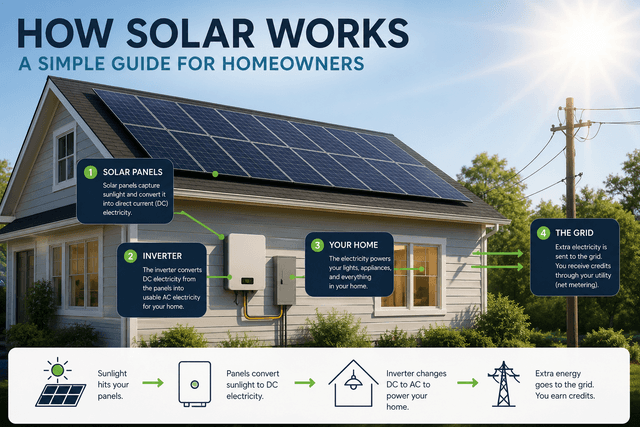
If you are new to solar, our guide on how solar works explains how panels, inverters and the grid work together.
Pro: Solar panels can lower electric bills
Most homeowners first consider solar because they want to reduce their electric bills.
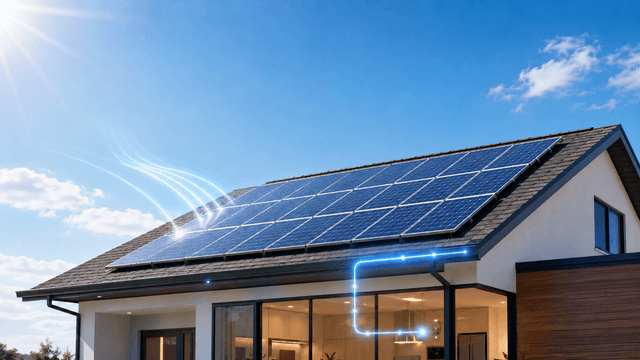
When your solar panels produce electricity, your home uses that power first. That means you may buy less electricity from the utility company.
Actual savings depend on your system size, electricity usage, local utility rules and how much sunlight your roof receives. But for many homeowners, reducing monthly utility costs is one of the strongest reasons to explore solar.
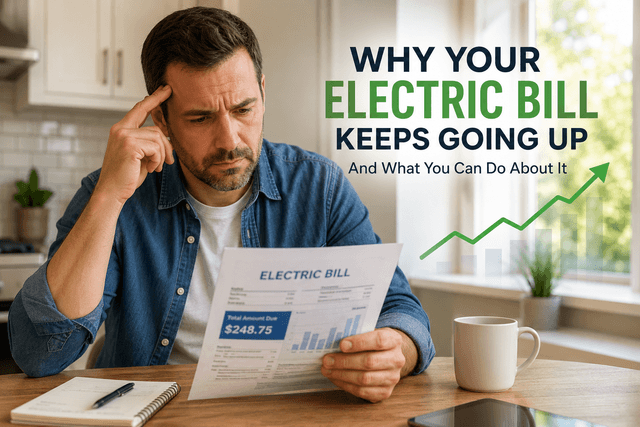
If your electric bill keeps rising, our article on why your electric bill keeps going up explains the larger factors that can affect utility costs.
Pro: Solar can reduce exposure to future utility rate increases
Utility rates can change over time. Homeowners who rely entirely on grid electricity are exposed to those future rate changes.
Solar changes the equation by allowing your home to produce some of its own electricity. That does not mean utility costs disappear entirely, but it may reduce how much future utility pricing affects your household.
Simple way to think about it:
Utility-only home: Buys all electricity from the utility.
Solar home: Produces some electricity on-site and buys grid power when needed.
Long-term benefit: Less dependence on future utility pricing for the electricity your system produces.
For a deeper comparison, read our article on solar vs. utility costs.
Pro: Solar panels can support energy independence
Solar gives homeowners more control over how their home is powered.
Instead of purchasing all electricity from the grid, your home can generate a portion of its own electricity from sunlight. That can be especially valuable for homeowners thinking about long-term energy planning, utility costs and grid reliability.
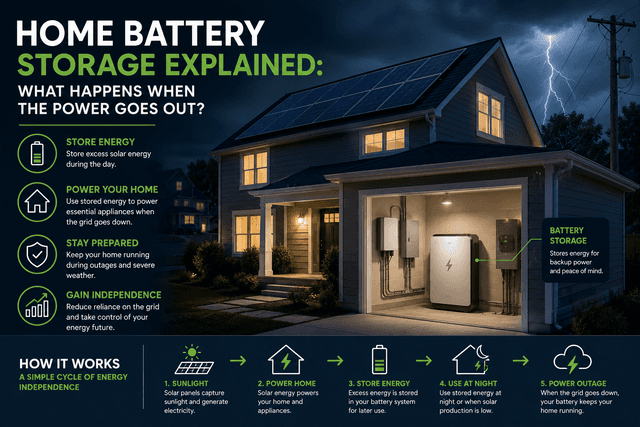
Solar panels alone usually do not provide backup power during an outage. If backup power is important, battery storage may be worth considering.
Our guide on home battery storage explains how batteries can store electricity and support selected parts of the home during outages.
Pro: Solar panels may increase home value
Solar can be attractive to homebuyers because it may reduce future operating costs for the home.
Owned solar systems are often viewed differently than leased systems or power purchase agreements, so the effect on home value can depend on ownership structure, market conditions and buyer expectations.
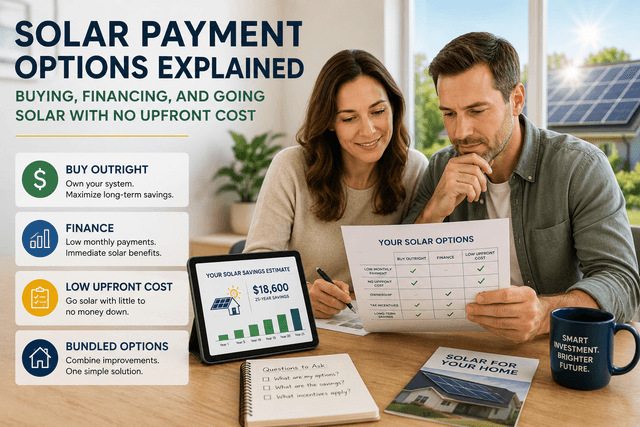
If home value is part of your decision, make sure you understand whether you are buying, financing, leasing or entering a power purchase agreement. Those options can have different implications.
Our article on solar payment options explains the main differences.
Pro: Solar can reduce your environmental footprint
Solar panels generate electricity from sunlight and do not produce emissions while operating.
For homeowners who want to reduce reliance on fossil fuel-based electricity, solar can be a practical way to lower the environmental impact of household energy use.
Solar panels do have an environmental cost from manufacturing, transportation and end-of-life handling. But over their operating life, they can produce clean electricity for decades.
When solar may not be the right fit
Solar is not the best option for every home. That does not mean solar is a bad investment. It means the decision should be based on the specific property.
Older roof
A roof near the end of its lifespan may need replacement before panels are installed.
Heavy shade
Trees, chimneys and nearby buildings can reduce solar production.
Very low usage
Homes with low electricity usage may see a longer financial return.
Short homeownership timeline
If you plan to move soon, the decision may require a closer review.
Con: Solar has a cost
Solar is a major home investment.
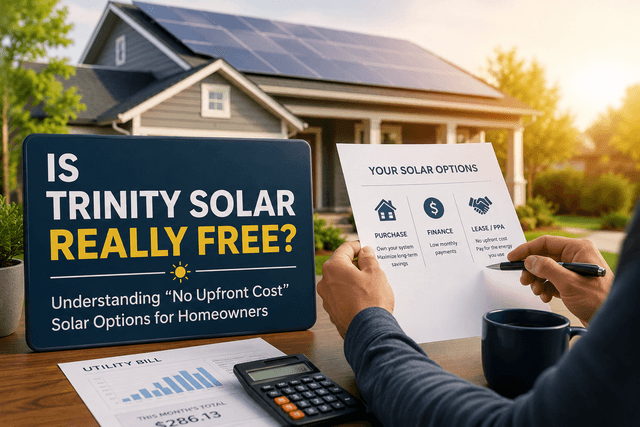
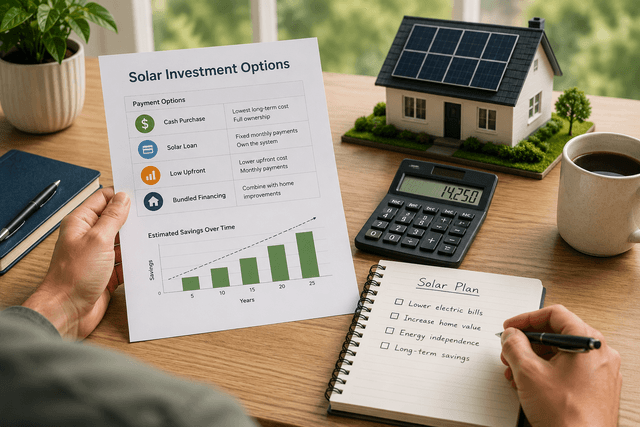
Some homeowners purchase systems outright, while others use financing, leases or power purchase agreements. The right option depends on budget, long-term goals and available programs.
The important point is that “low upfront cost” does not always mean “free.” Homeowners should understand monthly payments, ownership, agreement terms and long-term financial impact before making a decision.
Important: Solar cost should be evaluated against your electric usage, available payment options, utility costs and long-term goals—not just the installation price.
For a detailed breakdown, see our guide on how much Trinity Solar costs.
Con: Your roof may need work first
Your roof is the foundation for your solar system.
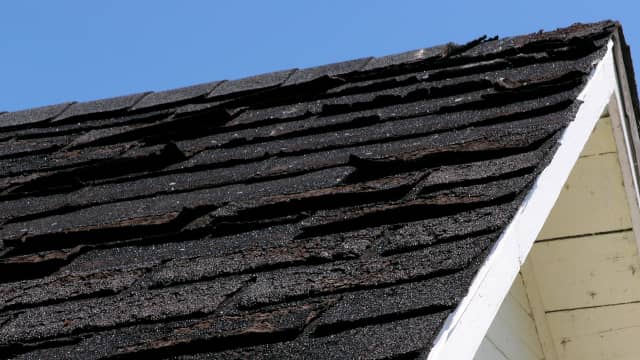
If your roof is older, damaged or near the end of its lifespan, it may need repair or replacement before solar panels are installed. Installing solar on a roof that needs replacement soon can create future removal and reinstallation costs.
A good solar evaluation should include a roof review so homeowners understand whether the roof is ready for panels.
If your roof is aging, read our guide on replacing your roof before installing solar.
Con: Solar production depends on sunlight and roof conditions
Solar panels need sunlight to produce electricity.
That does not mean they only work on perfect sunny days. Solar panels can still produce electricity during cloudy weather, but output is usually lower than during full sun.
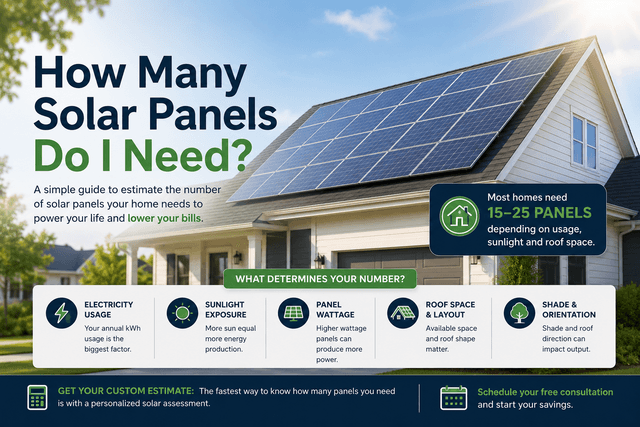
Production also depends on:
- Roof direction
- Roof angle
- Shade from trees or buildings
- Panel wattage
- System design
- Local weather patterns
If you want to understand production expectations, read our guide on how much power solar panels produce.
Con: Backup power usually requires a battery
Many homeowners assume solar panels automatically power the home during an outage.
Most grid-connected solar systems shut down during utility outages for safety reasons. This protects utility crews working on power lines.
If you want backup power during outages, a battery storage system may be needed. Batteries can store electricity and support selected circuits during an outage depending on system design.
Battery storage can add cost, but it may also provide added resilience and energy independence.
Solar may be a good fit if...
Solar may be worth exploring if several of these apply to your home:
- Your electric bill is consistently high
- Your roof gets good sunlight
- Your roof is in strong condition
- You plan to stay in the home for several years
- You want more predictable long-term energy costs
- You want to reduce dependence on utility-generated electricity
Solar may not be the best fit if...
Solar may require a closer review if several of these apply:
- Your roof needs replacement immediately
- Your home has heavy shade throughout the day
- You plan to move very soon
- Your electricity usage is very low
- Your roof has limited usable space
- You are not sure which payment option fits your goals
These factors do not automatically rule out solar. They simply mean the numbers and design should be reviewed carefully before moving forward.
What solar can and cannot do
Solar can solve several homeowner pain points, but it is important to understand what it does not automatically provide.
| Homeowner goal | Can solar help? |
|---|---|
| Lower electric bills | Yes, depending on system production and usage. |
| Protect against future utility rate increases | Yes, for the electricity your system produces. |
| Increase home value | Potentially, especially with owned systems. |
| Backup power during outages | Usually only with battery storage. |
| Eliminate every electric bill | It depends on usage, production, utility rules and system design. |
So, are solar panels worth it?
Solar panels may be worth it if your home has strong electricity usage, a suitable roof, good sun exposure and a payment option that fits your goals.
They may be less compelling if the roof is not ready, shade is heavy or your electricity usage is too low to support a strong financial return.
The best answer comes from a home-specific review that looks at your roof, electric bill, utility provider and long-term plans.
Solar is not right for every home, and that is the point.
The goal is not to install solar everywhere. The goal is to determine whether solar makes financial and practical sense for your home.
Continue learning
If you are weighing the pros and cons of solar panels, these guides are a good next step: