Solar payment options explained: How homeowners can pay for solar
Quick answer: Homeowners do not always need to pay for solar upfront. Many compare solar payment options the same way they compare other major home improvements: monthly affordability, long-term savings, ownership, available programs and total cost over time.
One of the biggest misconceptions about solar is that homeowners need tens of thousands of dollars available upfront.
In reality, most homeowners evaluate solar the same way they evaluate a roof, HVAC system or major home improvement project. They look at monthly affordability, long-term value and the overall financial impact.
Understanding your options is one of the most important steps in deciding whether solar makes sense for your home.
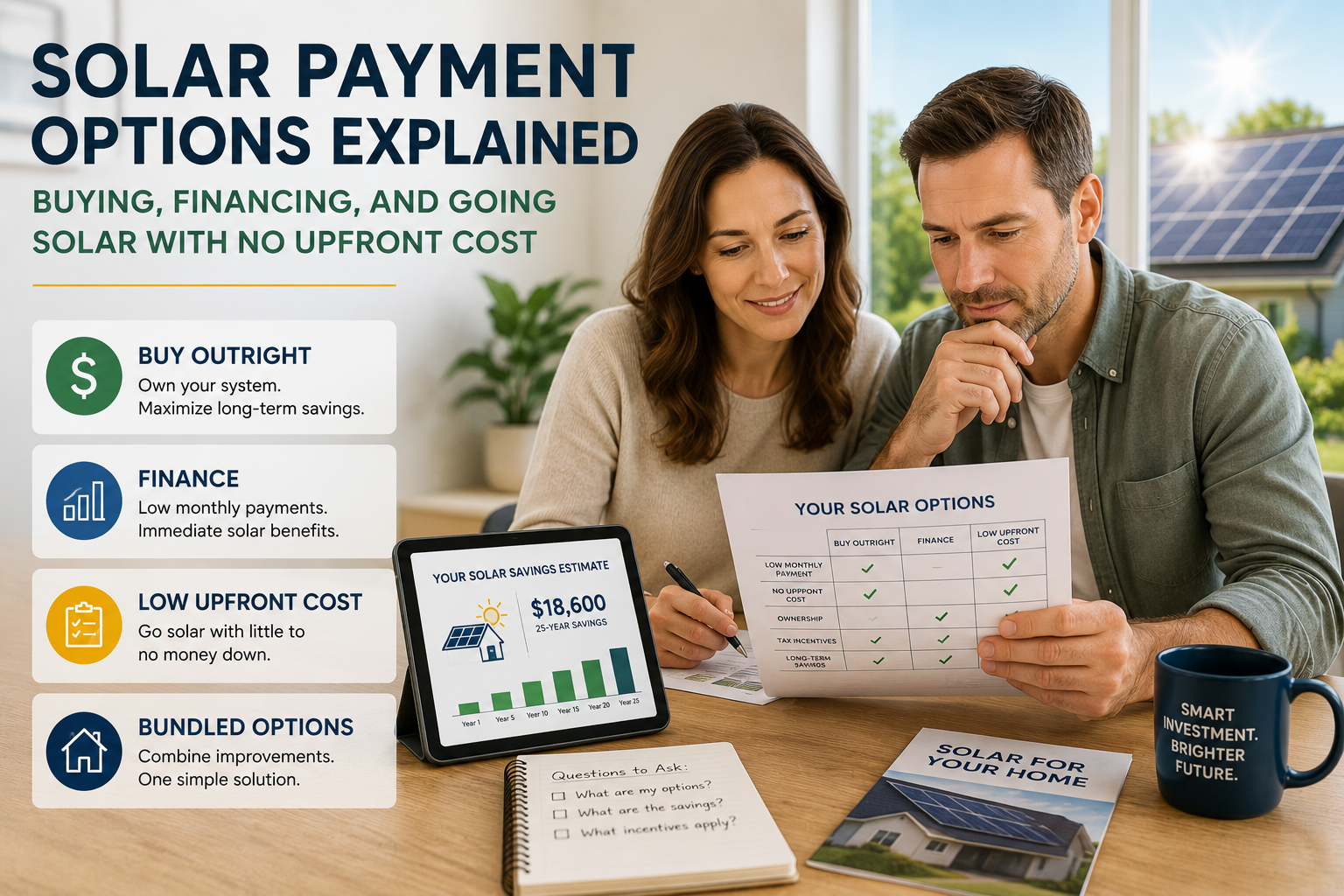
How do homeowners pay for solar?
There is no single way to pay for solar.
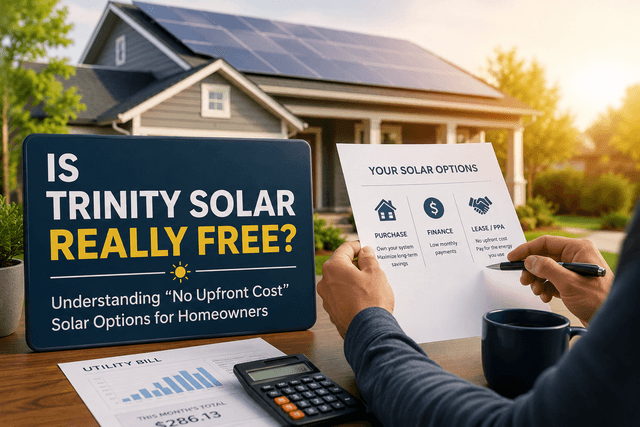
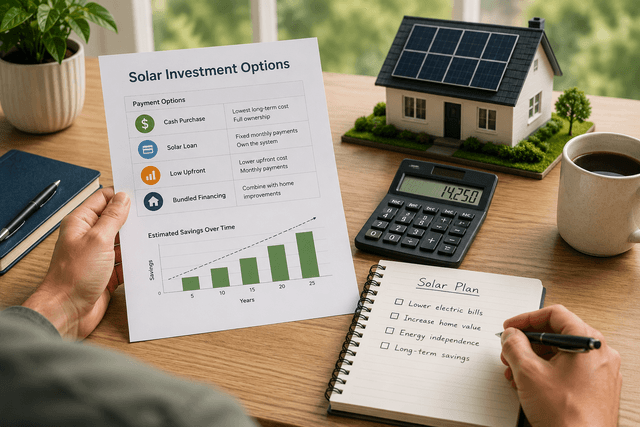
Depending on your provider, location, credit profile, system design and available programs, homeowners may have several payment paths to review.
Cash purchase
Pay for the system upfront and own it from day one.
Solar financing
Spread the cost over time through monthly payments.
Low upfront cost options
Reduce the initial barrier to getting started, depending on eligibility.
Bundled home improvement financing
In some cases, solar may be reviewed alongside related home upgrades.
The right option depends on your goals, budget, utility costs and how long you plan to stay in the home.
If you are still evaluating the bigger financial picture, our guide on solar vs. utility costs explains how homeowners compare solar against decades of future electricity bills.
Option 1: Purchasing solar outright
Some homeowners choose to purchase their solar system directly.
This usually requires the largest upfront investment, but it can also create the strongest long-term ownership position.
Potential benefits of buying solar outright:
- No monthly solar financing payment
- Full ownership from the start
- Potential for stronger long-term savings
- Simpler payment structure after installation
The tradeoff is that paying upfront may not fit every household budget. For many homeowners, keeping cash available for other priorities is one reason financing becomes part of the conversation.
Option 2: Monthly solar financing
Many homeowners prefer financing because it spreads the cost over time.
Instead of focusing only on total system cost, financing allows homeowners to compare a monthly solar payment against their current and future utility costs.
| Monthly utility bill | Monthly solar financing |
|---|---|
| Can change when rates increase | Often structured as a more predictable payment |
| Does not build ownership of an energy system | Can support system ownership depending on financing terms |
| Continues as long as the home uses utility power | May have a defined repayment timeline |
Monthly financing can make solar more accessible because homeowners do not have to pay the full system cost upfront.
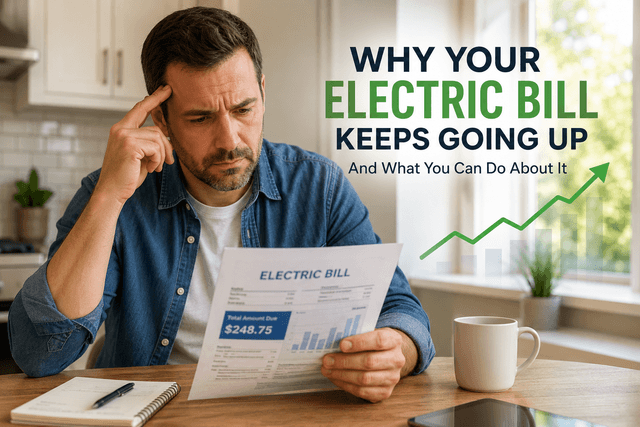
If rising utility costs are part of your concern, our article on why your electric bill keeps going up explains why many homeowners are looking for more control over future energy expenses.
Option 3: Low upfront cost programs
Depending on eligibility and available programs, some homeowners may qualify for options that require little or no upfront investment.
These options are designed to reduce the barrier to entry and help homeowners begin generating solar power without a large initial expense.
Availability can vary by location, provider, credit approval, system design and current program requirements.
Important: “Low upfront cost” does not always mean “lowest total cost.” Homeowners should compare monthly payments, total repayment amount, ownership terms and long-term savings before choosing a payment option.
What determines monthly solar costs?
Monthly solar costs are not the same for every home.
Several factors can influence what a homeowner may pay and what kind of system makes sense.
Electricity usage
Homes that use more electricity may need a larger solar system.
System size
The number of panels and expected production affect total project cost.
Roof characteristics
Roof direction, shade, pitch and usable space all affect system design.
Payment structure
Loan terms, interest rates and program details can affect monthly cost.
That is why a solar estimate should be based on actual energy usage and home-specific design, not a generic average.
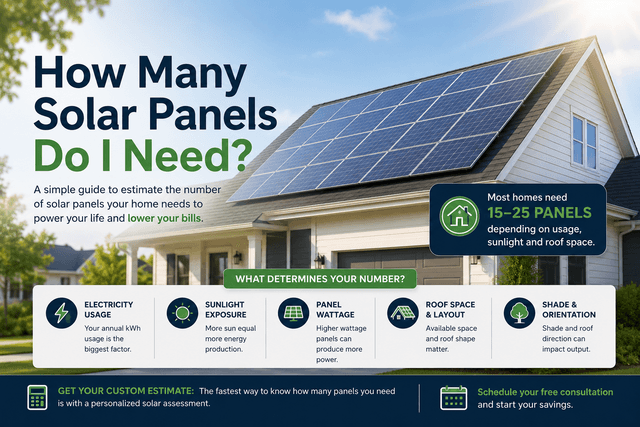
If you are trying to understand system size first, our guide on how many solar panels you need explains how usage, roof space and production estimates work together.
Looking beyond the monthly payment
Monthly affordability matters, but it should not be the only factor in the decision.
A low monthly payment may look attractive, but homeowners should also understand the total financial impact over time.
Questions to ask before choosing a solar payment option:
1. What is the monthly payment?
2. What is the total cost over the full term?
3. Who owns the system?
4. How does this compare with my current utility bill?
5. How long do I plan to stay in the home?
6. What savings or credits may apply?
The goal is not simply finding the lowest payment. The goal is understanding which payment structure best fits your home, budget and long-term energy goals.
How incentives and solar credits may affect payment decisions
Solar incentives and utility credits can affect the financial picture, but they do not all work the same way.
Some programs may reduce tax liability. Others may provide utility bill credits. Some depend on your state, utility provider, system design or installation timeline.
Because incentive rules can change, homeowners should review current program details before making a decision.
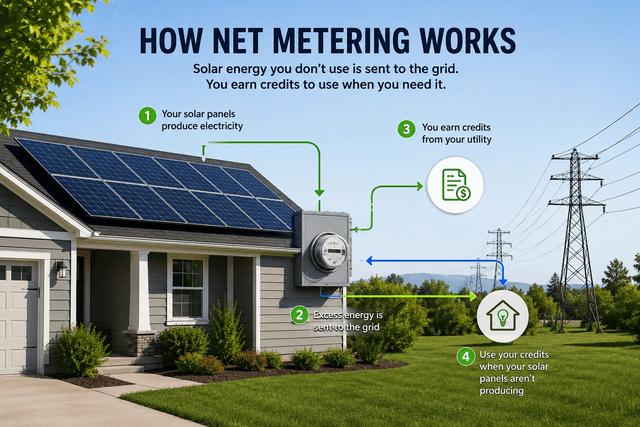
For more context, read our guides on the Federal solar tax credit and what net metering is.
Why rising utility rates matter
Solar financing is often part of a larger conversation about future energy costs.
When homeowners only compare solar against today’s electric bill, they may miss the long-term picture. Utility rates can rise, delivery charges can change and future energy costs can become harder to predict.
Financing can give homeowners a way to compare two different paths:
| Path | What it means |
|---|---|
| Stay fully with the utility | Continue buying electricity at future utility rates. |
| Finance solar | Use monthly payments to help create a home energy system that produces electricity from sunlight. |
That is why many homeowners look at solar as a long-term energy decision, not just a home improvement expense.
Which solar payment option is best?
There is no universal answer.
The best solar payment option depends on your household goals, budget, timeline in the home and comfort level with upfront cost versus monthly payments.
| If your priority is... | You may want to compare... |
|---|---|
| Lowest upfront cost | Financing or low upfront cost options |
| Maximum long-term ownership value | Cash purchase or ownership-focused financing |
| Monthly predictability | Structured monthly payment options |
| Long-term energy planning | Solar cost, utility rates, incentives and homeownership timeline together |
The most important step is reviewing your actual numbers. A good solar proposal should help you compare system size, expected production, payment structure and long-term value.
If you want a broader pricing breakdown, our guide on how much Trinity Solar costs explains the main factors that can affect cost.
Final thoughts
Solar payment options give homeowners more flexibility than many people expect.
You may not need to pay for the entire system upfront. In many cases, the better question is how the monthly cost, total long-term value and future utility savings compare for your specific home.
Understanding the payment options is the first step. Understanding which option fits your home is the next.
The real question is not just “Can I afford solar?”
The better question is which payment option makes the most sense for your monthly budget, long-term energy costs and homeownership goals.
Continue learning
If you are comparing solar costs and payment options, these guides are a good next step: