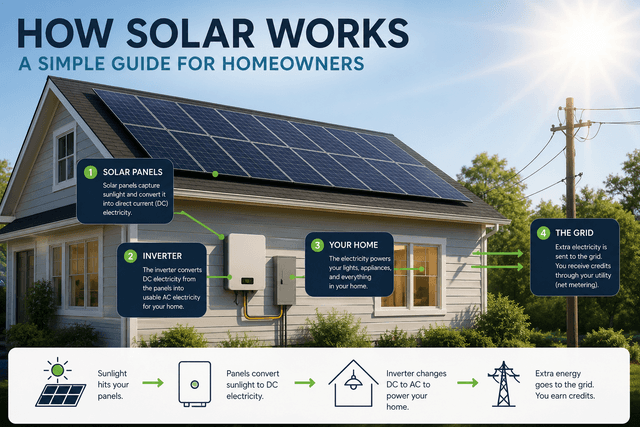
What is net metering? How solar credits can lower your electric bill.
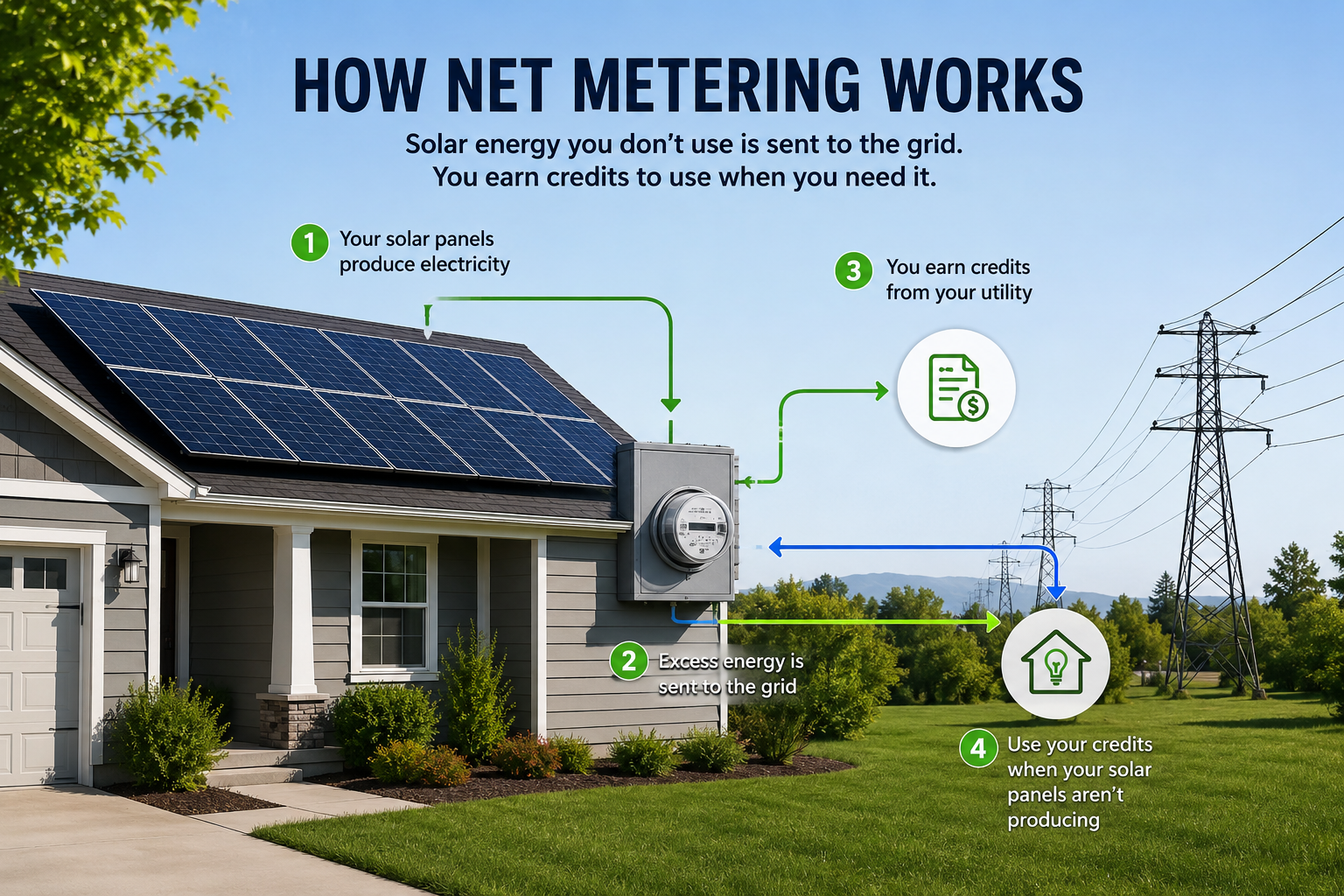
Net metering is one of the biggest financial benefits of going solar. Instead of letting unused electricity go to waste, your utility tracks the extra power your solar panels produce and applies credits to your account. Those credits help offset electricity you use later, like at night or during cloudy weather.
Think of it like a savings account for electricity. When your solar panels produce more power than your home needs, you earn credits. When your home needs more electricity than your panels are producing, those credits help lower your utility bill.
How Does Net Metering Work?
Here's a simple example:
Step 1: Your solar panels produce 25 kWh of electricity during a sunny afternoon.
Step 2: Your home only needs 15 kWh.
Step 3: The remaining 10 kWh is sent back to the utility grid.
Step 4: Your utility records those 10 kWh as energy credits.
Step 5: Later that evening, when your solar panels aren't producing electricity, those credits help pay for the electricity you pull from the grid.
Rather than losing the extra energy your system produces, you're receiving value for it.
How Net Metering Works in Connecticut
Connecticut no longer uses traditional residential net metering for most new solar installations.
Instead, homeowners participate in the Residential Renewable Energy Solutions (RRES) program.
Homeowners can generally choose between:
- Netting Tariff – Your home uses solar first, and excess electricity earns credits that help reduce future utility costs.
- Buy-All Tariff – All electricity your system generates is sold directly to the utility at a fixed compensation rate while your home purchases electricity separately.
The best option depends on your home's energy usage and long-term goals.
How Net Metering Works in New Jersey
New Jersey continues to offer one of the strongest residential net metering programs in the country.
When your solar system produces more electricity than your home needs, your utility applies retail-rate credits that roll throughout the annual billing cycle.
Those credits help offset electricity you use during evenings, cloudy days, or throughout higher-demand seasons.
Why Net Metering Matters
Without net metering—or Connecticut's Netting Tariff—unused solar production would provide much less financial value. These programs help homeowners maximize the savings from every kilowatt-hour their solar system generates.
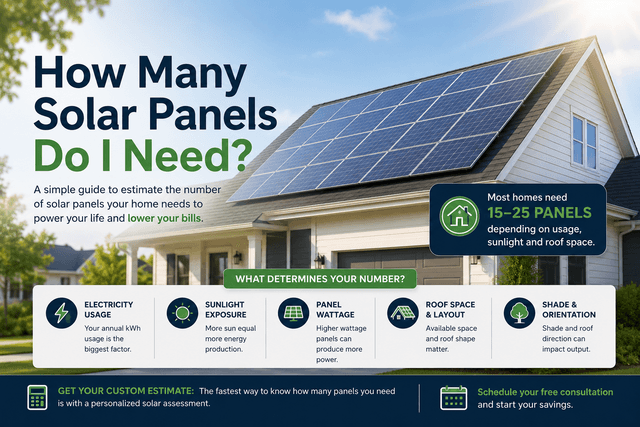
That's one reason system sizing is so important. A properly designed solar system can produce enough electricity to significantly reduce, and in many cases offset, your annual electric usage.
Continue Learning
If you're considering solar, these guides are a great next step: