Why is my electric bill so high? What is driving energy costs up?
Quick answer: If your electric bill keeps increasing even though your habits have not changed, you are not alone. Rising utility rates, aging infrastructure, growing electricity demand, inflation and severe weather are all contributing to higher energy costs across the country.
If your electric bill seems higher every year, you are not imagining it.
Across the country, homeowners are seeing energy costs climb even when their usage habits stay mostly the same. While seasonal weather can play a role, the larger issue is that electricity itself is becoming more expensive to deliver.
The real challenge is not just that electricity costs more today. It is that most homeowners have very little control over what those costs will be next year, or even next month.
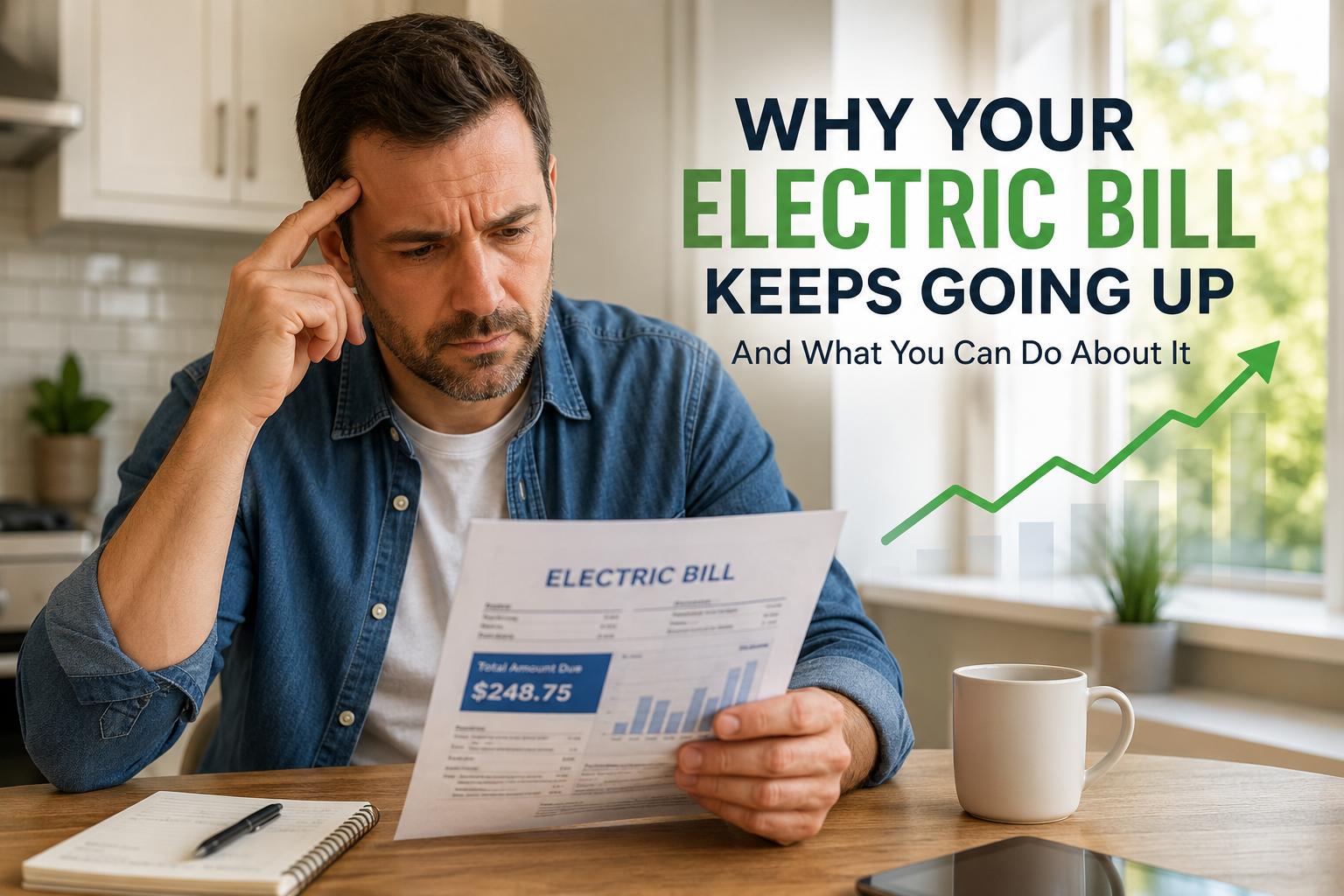
Why are electric bills increasing?
Many homeowners assume their electric bill went up because they used more electricity.
Sometimes that is true. Running air conditioning during a heat wave, using more appliances or spending more time at home can all increase usage.
But many recent bill increases have less to do with household habits and more to do with the cost of generating, transmitting and delivering electricity.
Utilities are investing in grid upgrades, replacing aging infrastructure and preparing for higher electricity demand. As those costs rise, they are often passed along to customers through higher rates, delivery charges or other bill adjustments.
Common reasons electric bills increase:
1. Utility rate increases
2. Higher seasonal usage
3. Grid upgrades and infrastructure costs
4. Inflation and operating expenses
5. Severe weather and storm recovery
6. Growing electricity demand
What is causing electricity prices to rise?
Electricity costs are affected by more than just how much energy your home uses. Several long-term trends are putting pressure on utility systems.
Growing energy demand
Homes, businesses, electric vehicles, data centers and new technologies all require more electricity than ever before.
Grid modernization
Utilities continue investing in transmission lines, substations, poles, wires and other aging infrastructure.
Severe weather
Storms, heat waves, flooding and winter weather can create additional grid stress and repair costs.
Inflation
Equipment, fuel, labor, maintenance and construction costs can all affect what utilities charge customers.
These are not short-term issues. They are long-term pressures that can continue shaping energy costs for years.
Your electric bill has two main parts
One reason electric bills can feel confusing is that homeowners are not only paying for the electricity they use.
They are also paying for the system that delivers that electricity to the home.
| You are paying for... | What it means |
|---|---|
| Electricity usage | The amount of electricity your home consumes during the billing period. |
| Delivery and infrastructure | The cost of maintaining poles, wires, substations, meters and the electric grid. |
| Utility adjustments | Additional charges that may reflect supply costs, storm recovery, program fees or rate changes. |
That means your bill can rise even if your usage has not changed much. If the rate you pay for electricity or delivery increases, your total bill can go up too.
Why many homeowners feel stuck
Most homeowners rely entirely on their utility provider for power.
That creates a frustrating reality: you can control how much electricity you use, but you do not control the price the utility charges for that electricity.
| What homeowners can control | What homeowners cannot control |
|---|---|
| Thermostat settings | Utility rate increases |
| Appliance usage | Grid investment costs |
| Lighting and daily habits | Storm recovery charges |
| Efficiency upgrades | Future electricity pricing |
As long as your home depends fully on utility-generated electricity, your energy costs remain tied to decisions and costs outside your household.
What can homeowners do to lower electric bills?
There are several ways to reduce electricity usage.
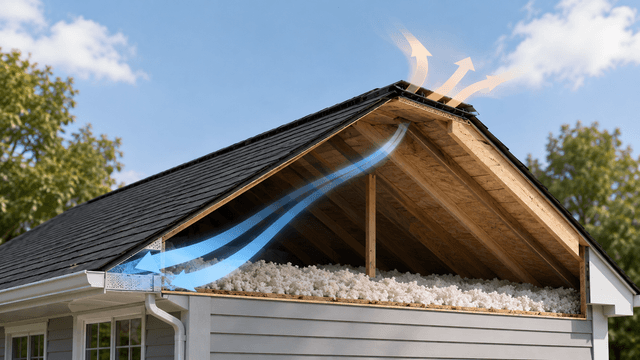
Improving insulation, upgrading appliances, using smart thermostats, sealing air leaks and changing daily habits can all help lower consumption.
Those steps can be useful. But they do not fully protect homeowners from future rate increases.
| Strategy | Can lower usage? | Can reduce exposure to future rate increases? |
|---|---|---|
| LED bulbs | Yes | No |
| Smart thermostat | Yes | No |
| Better insulation | Yes | No |
| Energy-efficient appliances | Yes | No |
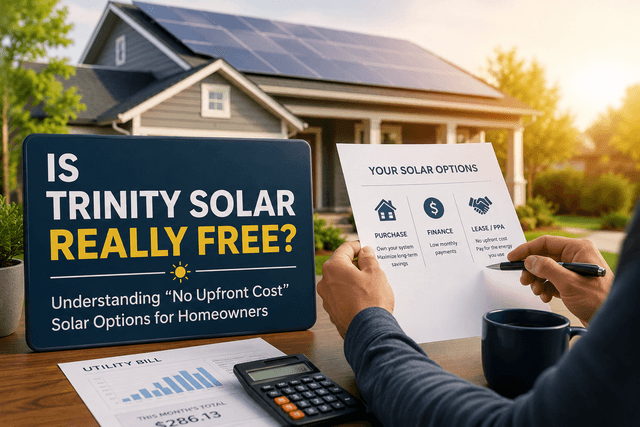
| Solar | Yes | Yes, for the electricity your system produces |
| Solar + battery storage | Yes | Yes, with added backup and energy storage benefits |
For many homeowners, the issue is not only using less electricity. It is gaining more control over how the home is powered.
Why more homeowners are looking for energy independence
As utility costs continue to rise, more homeowners are looking for options that provide greater predictability.
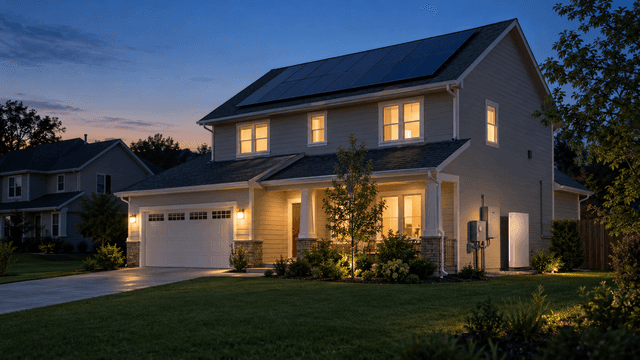
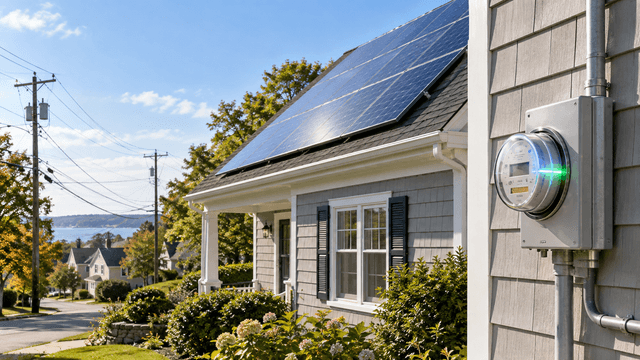
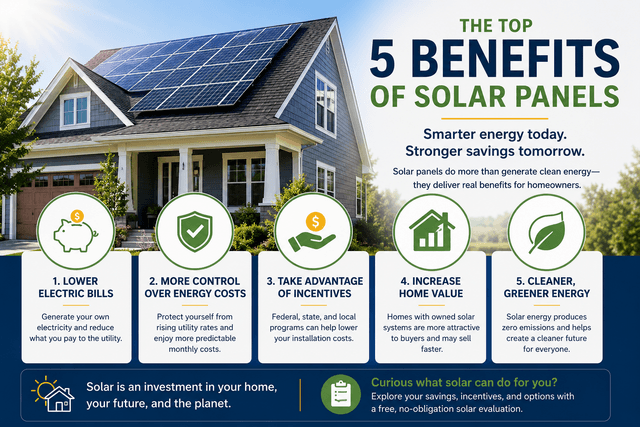
Solar allows homeowners to generate electricity directly from their property instead of buying all of it from the utility company.
Less grid dependence
Your home can produce a portion of its own electricity.
More predictability
Solar can reduce exposure to changing utility rates.
Long-term planning
Solar helps homeowners think beyond one monthly bill.
Potential savings
The value depends on your roof, usage, utility rates and system design.
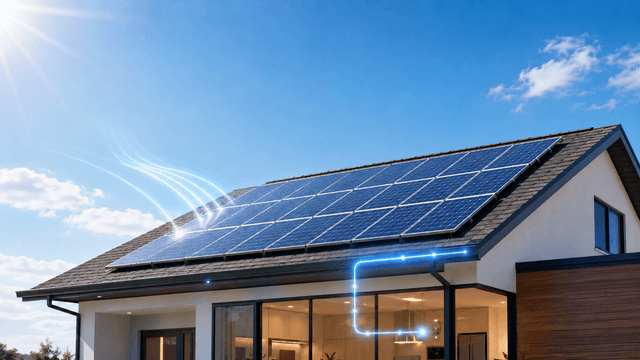
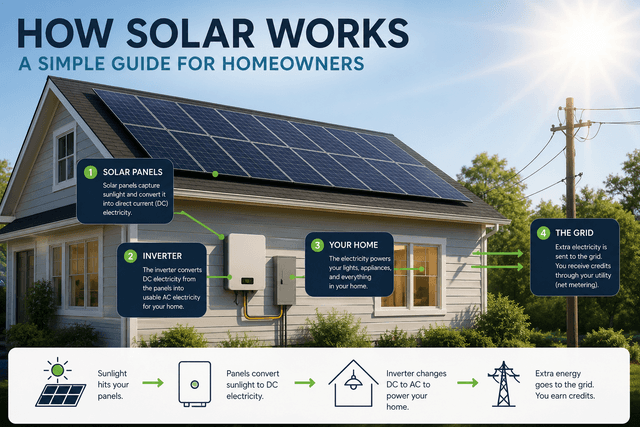
If you are new to the concept, our guide on how solar works explains how panels turn sunlight into electricity for the home.
For a long-term financial view, our article on solar vs. utility costs explains why many homeowners compare solar against decades of future electricity bills.
Where battery storage fits into the conversation
Rising utility costs are not the only concern. Many homeowners are also thinking about outages, grid reliability and energy resilience.
That is where battery storage can become part of the discussion.
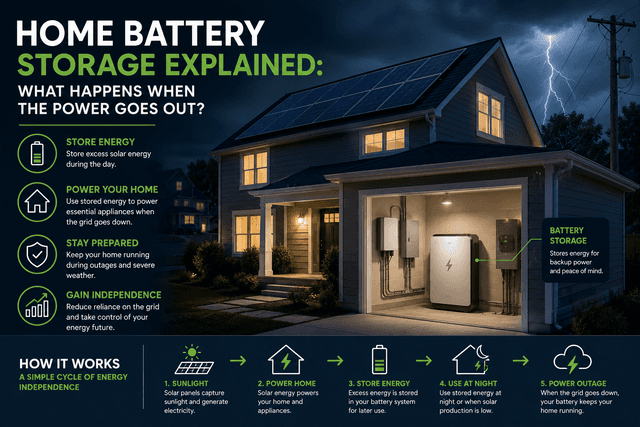
A home battery can store electricity for later use. When paired with solar, it may help keep selected parts of the home running during an outage, depending on system design.
If outages or backup power are part of your concern, read our guide on home battery storage.
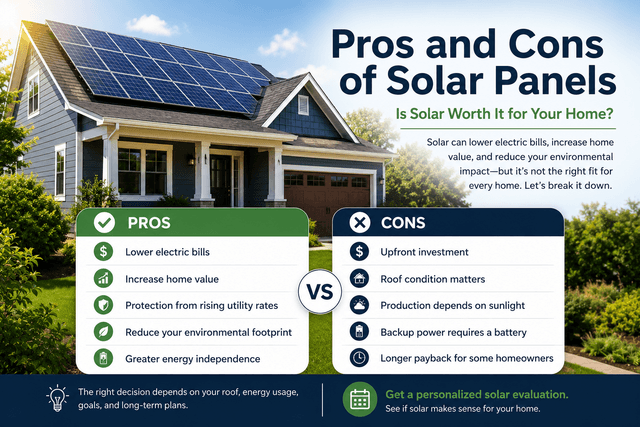
Is solar the right fit for every home?
Not necessarily.
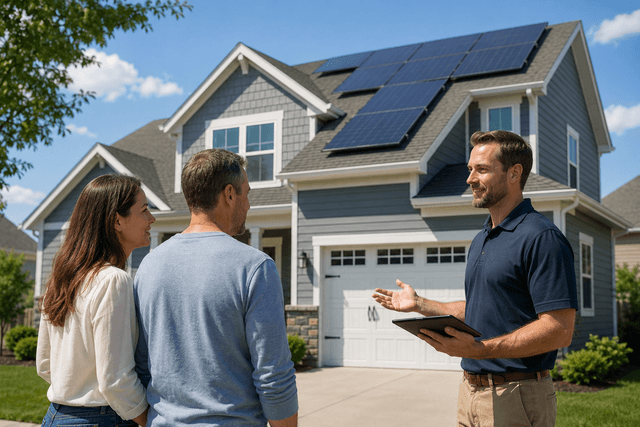
Several factors influence whether solar makes sense for a specific home. A good solar evaluation should look at the home itself, not just the electric bill.
Roof condition
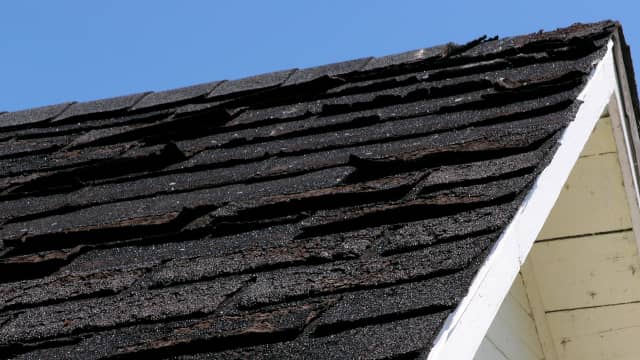
An older or damaged roof may need attention before solar is installed.
Sun exposure
Shade, roof direction and roof angle affect solar production.
Electric usage
Homes with higher usage often have more opportunity to offset utility costs.
Local programs
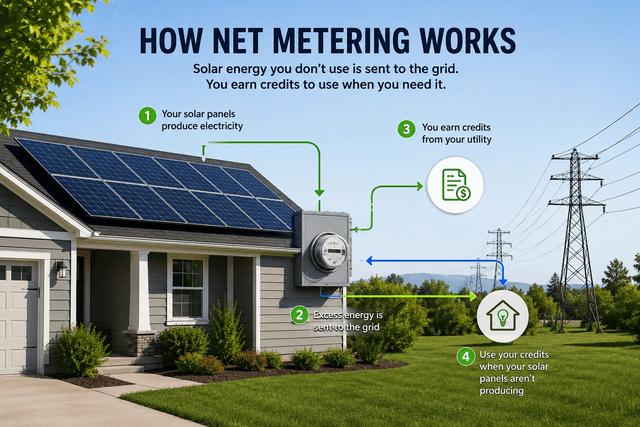
Utility rules, credits and incentives vary by state and provider.
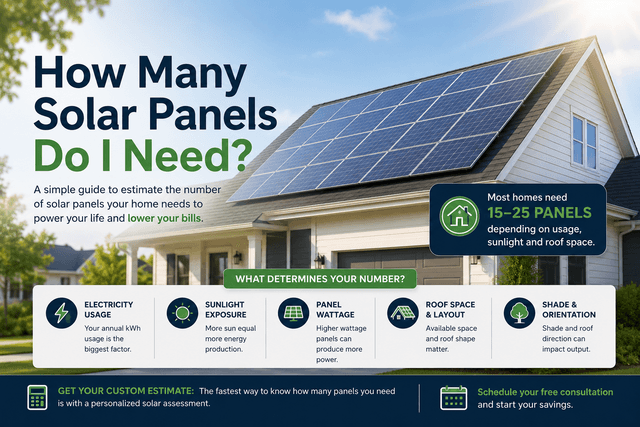
If you are wondering how many panels your home may need, start with our guide on how many solar panels you need.
You can also learn how production is estimated in our article on how much power solar panels produce.
The better question homeowners are asking
Most homeowners start with a simple question:
Why is my electric bill so high?
Eventually, the question often changes.
What can I do so I am less affected when utility prices go up again?
For many homeowners, that is where the conversation shifts from using less electricity to producing more of their own energy.
Solar is not right for every home, but it can give many homeowners a way to reduce long-term exposure to rising utility costs and create a more predictable energy plan.
Final thoughts
Electric bills are rising for many reasons, and not all of them are within a homeowner’s control.
Efficiency upgrades and smarter usage habits can help, but they do not change the larger utility rate environment.
For homeowners who want more control, solar may be worth exploring as part of a long-term energy strategy.
Continue learning
If you are trying to understand rising electricity costs and your options, these guides are a good next step: