Quick answer
Yes, solar panels work on cloudy days. Clouds reduce the amount of sunlight reaching the panels, so electricity production usually drops, but panels can still convert diffuse sunlight into usable power. Annual production—not one cloudy afternoon—is the more useful measure of system performance.
Solar panels do not need a perfectly clear sky to generate electricity. They need sunlight, and some sunlight still reaches the ground when the sky is cloudy. The amount of electricity produced changes with the density of the cloud cover, the time of day, the season and the design of the solar system.
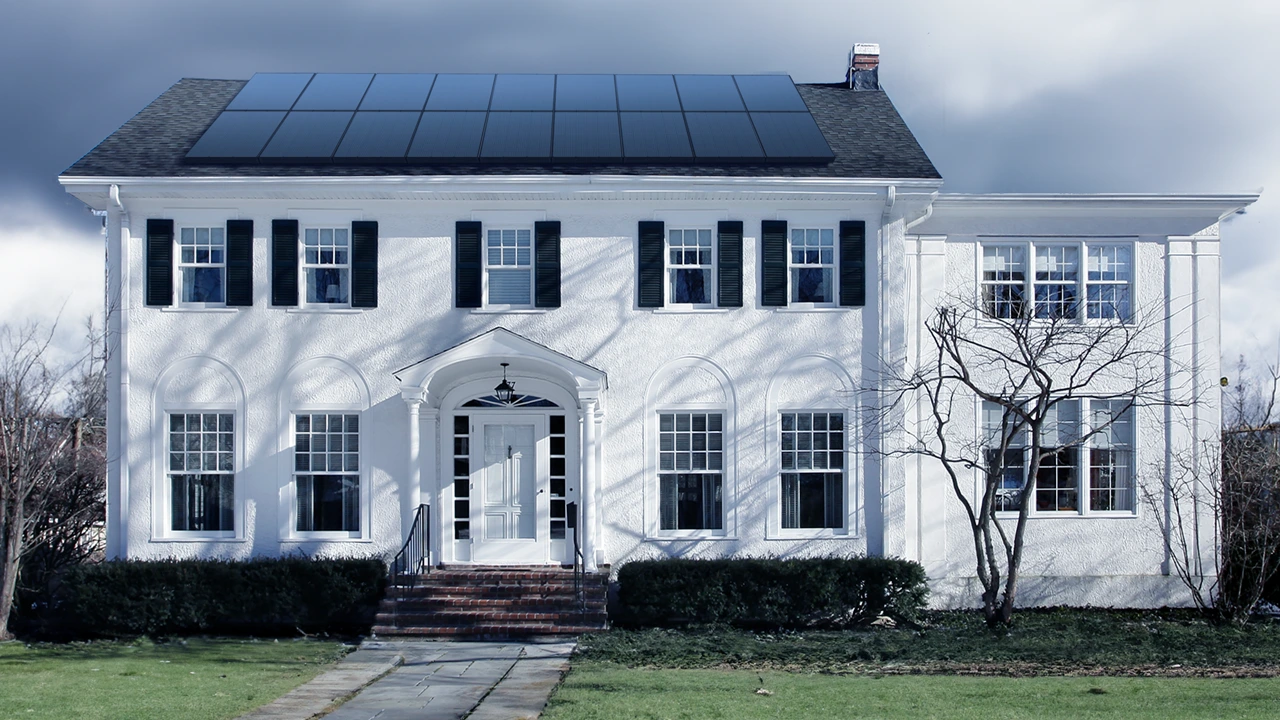
That means a cloudy day may produce less solar electricity than a bright day without indicating that anything is wrong. Understanding the difference between normal weather-related variation and an actual performance problem can make monitoring your system much easier.
Cloudy days
Panels still produce electricity, but output generally decreases.
Rainy days
Production continues when daylight reaches the panels.
At night
Panels stop producing because sunlight is no longer available.
Over the year
System design accounts for local weather and seasonal sunlight.
How solar panels generate power under clouds
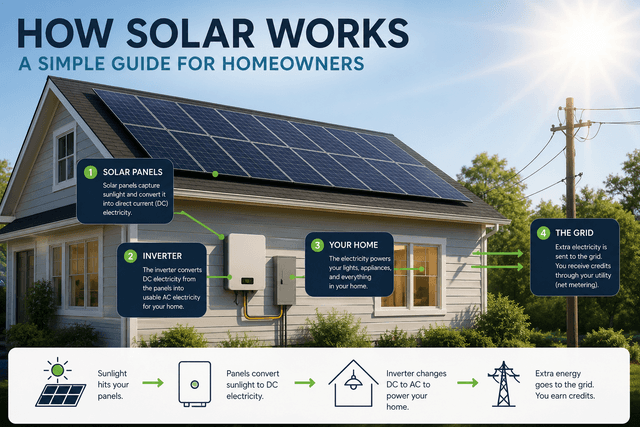
Solar panels contain photovoltaic cells that convert light into direct-current electricity. The inverter then converts that electricity into the alternating current used by the home.
On a clear day, panels receive a large amount of direct sunlight. Clouds scatter, absorb and reflect some of that light. The sunlight that still reaches the surface after being scattered is called diffuse solar radiation. Photovoltaic panels can use both direct and diffuse sunlight, which is why production does not automatically stop when clouds move overhead.
The key distinction
Clouds reduce solar intensity; they do not eliminate daylight. The heavier the cloud cover, the less solar energy typically reaches the array.
How much production drops on cloudy days
There is no accurate, universal percentage for cloudy-day solar production. “Cloudy” can describe anything from thin, high clouds to a dark storm system. Those conditions do not block the same amount of sunlight.
| Weather condition | Typical production pattern | What it means |
|---|---|---|
| Thin or high clouds | A moderate or sometimes brief reduction | A meaningful amount of sunlight may still reach the array. |
| Passing clouds | Output rises and falls throughout the day | Short-term changes often track the movement of clouds. |
| Dense overcast | A larger production reduction | Less direct and diffuse light reaches the panels. |
| Heavy storm | Production may become very low temporarily | Dark clouds and heavy precipitation can sharply limit available light. |
The clearest answer comes from the system’s monitoring data. Compare production with the weather at the property and look at performance across weeks, months and seasons instead of judging the system from a single moment.
What else affects cloudy-day solar production?
Cloud cover is only one variable. Two homes experiencing the same weather can produce different amounts of electricity because their systems and sites are different.
Time of day
Even under identical clouds, output is generally different in the early morning, around midday and near sunset.
Season
Day length and the sun’s position change throughout the year, affecting how much solar energy is available.
Roof orientation
The direction and pitch of the roof influence how much light reaches the panels across the day.
Shade
Trees, chimneys and nearby structures can further limit the light reaching part of the array.
System design
Panel placement, equipment specifications and array size all influence expected production.
Panel condition
Snow, debris, equipment faults or persistent heavy soiling can affect performance independently of clouds.
A professional solar assessment considers these factors together. Learn more about the physical conditions that affect solar suitability in Can my house have solar panels?
Do solar panels work in rain, snow and winter?
Rain
Panels can continue producing electricity during rain as long as daylight reaches them. Output commonly drops when rain arrives with dense clouds.
Snow
Cold weather does not prevent photovoltaic generation, but snow covering the panel surface can temporarily block sunlight and reduce production.
Winter
Panels generate electricity from light rather than heat. Shorter days, a lower sun angle, snow and seasonal cloud cover may reduce winter production.
Avoid unsafe snow removal
Do not climb onto a snowy or icy roof to clean solar panels. Contact the solar provider if snow coverage or another condition appears to be causing a persistent performance concern.
What powers the home when solar production is low?
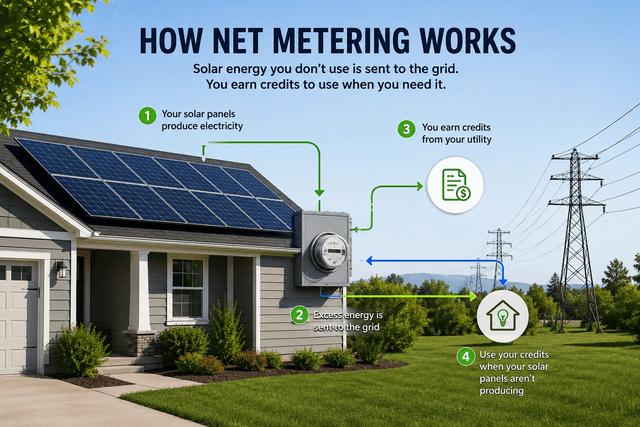
A grid-connected solar home does not normally lose power just because clouds reduce panel output. The home can use available solar electricity and obtain additional electricity from the utility when household demand exceeds current solar production.
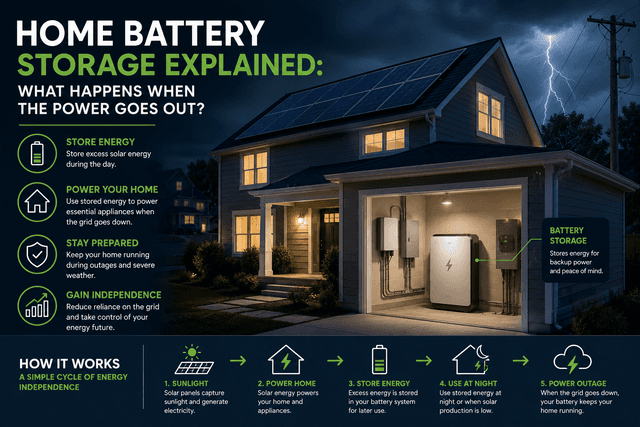
A solar battery can store electricity for later use when configured as part of the system, but battery operation depends on the equipment, settings, available stored energy and system design. Solar panels themselves do not generate electricity at night.
| Situation | Solar panels | Other electricity source |
|---|---|---|
| Cloudy daytime | May produce at a reduced level | Utility or stored battery energy may supplement production. |
| Clear daytime | Generally produces more electricity | The source depends on production, household demand and system configuration. |
| Nighttime | Does not produce electricity | The home uses the utility, stored battery energy or another configured source. |
Daily output versus annual solar production
Solar production naturally changes from hour to hour and month to month. A properly prepared solar proposal should model expected production using factors such as the property’s location, roof characteristics, shading and historical solar-resource data.
That annual perspective matters because lower-production days can be balanced by brighter days during other parts of the year. One cloudy day does not determine whether a home is a good candidate for solar or whether the system is meeting its longer-term expectations.
A better way to evaluate performance
- Compare production with the weather and season.
- Review daily, monthly and annual monitoring trends.
- Look for alerts or a drop that continues after weather improves.
- Contact the solar provider when the data does not match normal conditions.
When lower production may need attention
A temporary dip during dense cloud cover is usually expected. Lower output may deserve a closer look when it continues after the sky clears or does not match the system’s established pattern.
Monitoring alert
The monitoring platform reports an equipment or communication issue.
Persistent decline
Production remains unusually low after the weather improves.
Unexpected obstruction
New shade, debris or prolonged snow coverage appears to affect the array.
Visible damage
Panels, wiring or other equipment appear damaged after severe weather.
If a performance concern persists, document the dates, weather conditions, monitoring alerts and visible changes before contacting the provider. Your warranty documents can help clarify service responsibilities. Read Solar panel warranties: what is actually covered? for more context.
The bottom line
Solar panels work on cloudy days because photovoltaic cells can use the diffuse sunlight that passes through and around clouds. Production usually decreases as cloud cover becomes heavier, but normal weather-related variation does not mean the system has stopped working.
The more useful question is whether the system was designed for the property’s real annual conditions. A site-specific assessment and realistic production estimate can show how the roof, shade, local weather and energy use fit together.
Plan for real-world conditions
Find out how solar could perform on your home
A solar consultation can evaluate your roof, shade, electricity use and local solar conditions to create a property-specific estimate.
Continue learning