Benefits of solar panels: 5 reasons homeowners are making the switch
Quick answer: Solar panels can lower electric bills, provide more predictable energy costs, increase home value, reduce environmental impact and give homeowners more control over their electricity. Whether those benefits outweigh the investment depends on your home’s energy use, roof and long-term goals.
Homeowners usually start thinking about solar for one reason: electricity is expensive.
But the benefits of solar panels go beyond one monthly bill. Solar can help homeowners reduce dependence on the utility grid, plan for long-term energy costs and make their homes more efficient.
This guide explains the biggest reasons homeowners choose solar and how to decide whether those benefits apply to your home.
Benefits of solar panels at a glance
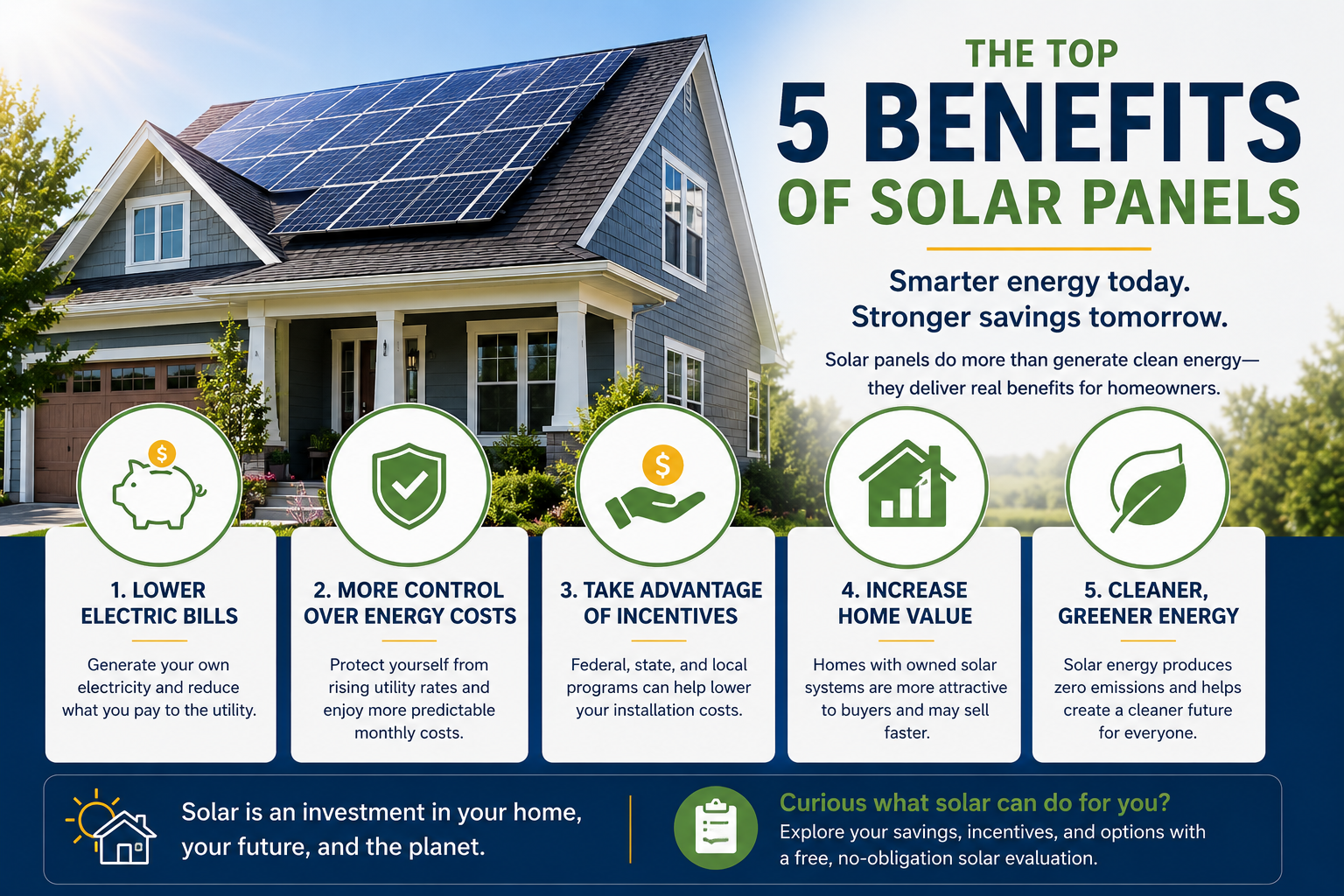
Solar can provide several financial and practical benefits, but the value depends on your home and your energy goals.
| Benefit | Why it matters |
|---|---|
| Lower electric bills | Your home can use electricity produced by your solar panels instead of buying all power from the utility. |
| More predictable energy costs | Solar can reduce exposure to future utility rate increases for the electricity your system produces. |
| Available programs | State, utility or payment programs may improve the financial picture depending on location and eligibility. |
| Potential home value impact | Owned solar systems may appeal to buyers because they can reduce future operating costs. |
| Cleaner energy | Solar produces electricity from sunlight and reduces reliance on fossil fuel-based power. |
1. Lower your electric bills
The most obvious benefit of solar panels is the potential to reduce your electric bill.
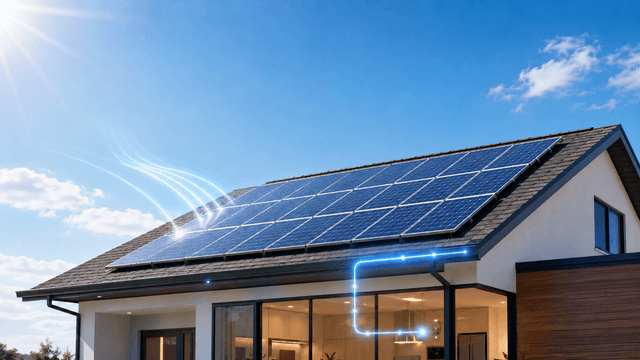
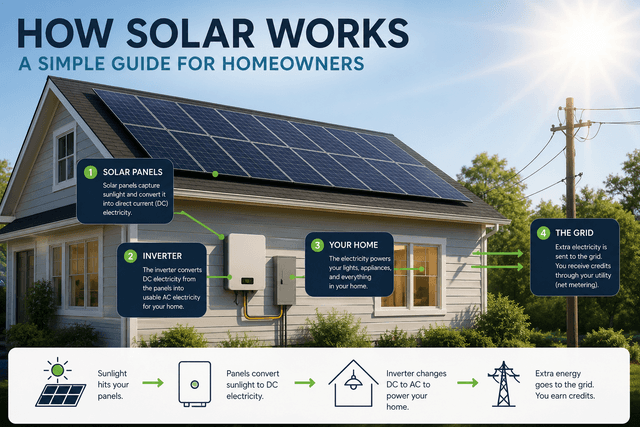
When your solar panels produce electricity, your home uses that power first. That means you may need to buy less electricity from the utility company.
Actual savings depend on system size, electricity usage, roof conditions, sunlight and local utility rules. But for many homeowners, solar creates value by reducing the amount of grid electricity they need over time.
Simple savings path:
1. Your solar panels produce electricity.
2. Your home uses solar power first.
3. You buy less electricity from the grid.
4. Utility rates may change over time.
5. Your solar system continues producing electricity from sunlight.
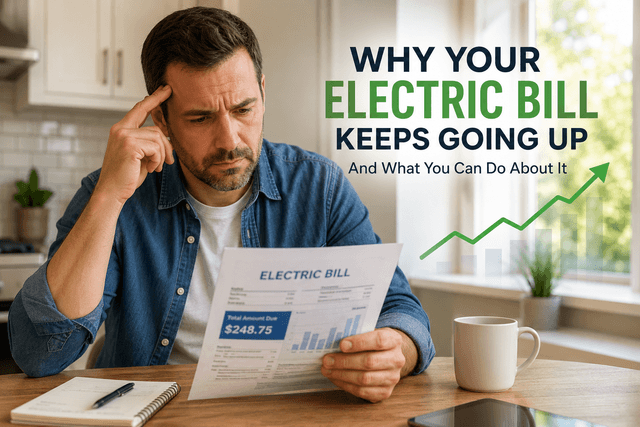
If your bill keeps increasing, read our guide on why your electric bill keeps going up.
For a longer-term view, our article on solar vs. utility costs explains how homeowners compare solar against decades of future electricity bills.
2. Gain more control over energy costs
Utility companies control electricity rates. Homeowners control how much electricity they use, but they do not control what the utility charges for that electricity.
Solar changes that relationship by allowing your home to produce some of its own power.
You may still remain connected to the grid, and you may still receive a utility bill. But solar can reduce how much electricity you need from the utility, which can make long-term energy costs feel more predictable.
| Utility-only home | Solar home |
|---|---|
| Buys all electricity from the utility | Produces some electricity on-site |
| Fully exposed to future rate changes | Less exposed for the power the system produces |
| Limited control over future energy pricing | More control over part of the home’s energy supply |
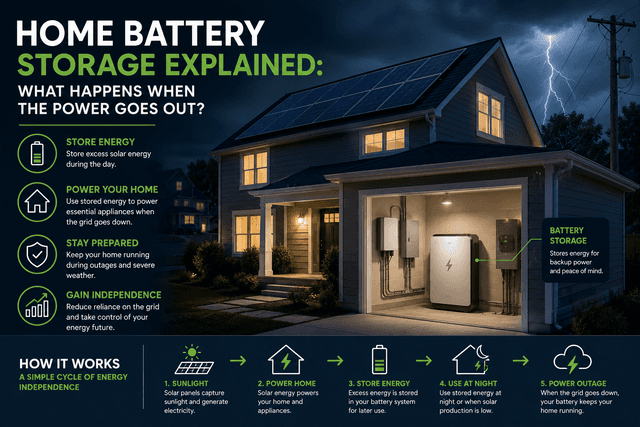
If energy independence or outage protection is important, battery storage may also be worth reviewing. Our guide on home battery storage explains how batteries can store electricity for later use.
3. Take advantage of available solar programs
Solar programs can improve the financial picture, but they vary by state, utility provider, system design and installation timeline.
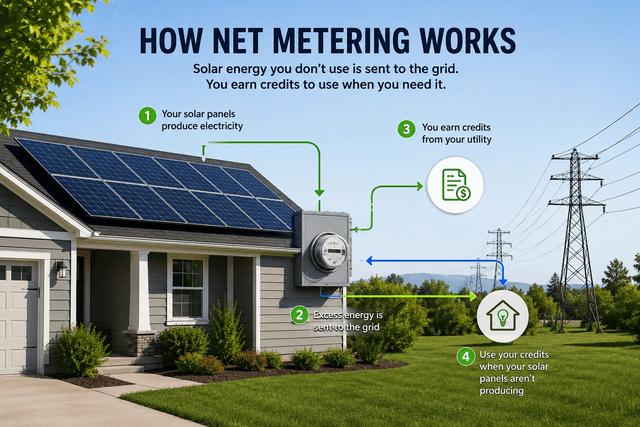
Some programs may help homeowners through utility credits. Others may affect taxes, production value or payment options. The important point is that not every homeowner qualifies for every program.
| Program type | What it may do |
|---|---|
| Utility credits | May credit excess solar production, depending on local program rules. |
| State programs | May provide additional value based on your state and utility provider. |
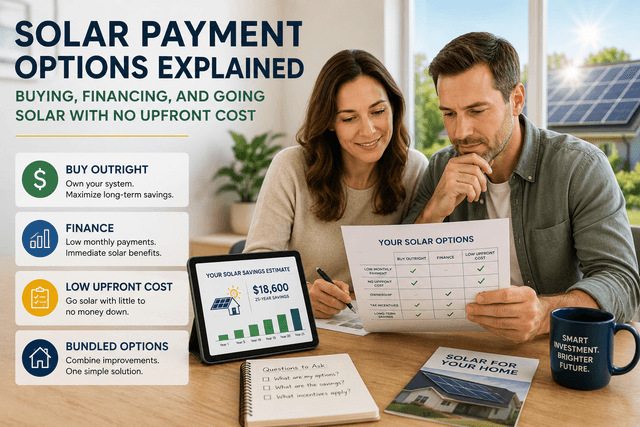
| Payment options | May reduce the upfront barrier to going solar, depending on eligibility. |
If you live in Connecticut, read our guide to Connecticut solar incentives. If you are comparing state-level solar decisions, our guides to going solar in Connecticut and going solar in New Jersey are useful next steps.
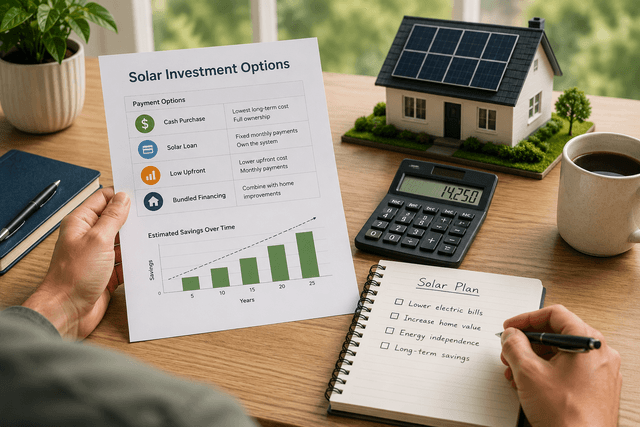
For cost and financing, see how much Trinity Solar costs and solar payment options explained.
4. Increase your home’s appeal and potential value
Your home may be one of your largest investments, so major upgrades should be evaluated carefully.
Solar can make a home more appealing to some buyers because it may reduce future electricity costs. This is especially true when the system is owned and the buyer understands the long-term energy benefit.
The impact on home value depends on the local market, system ownership, system age, production history and buyer expectations.
Important: Owned systems, financed systems, leases and power purchase agreements can be viewed differently during a home sale. Make sure you understand your payment structure before choosing a solar option.
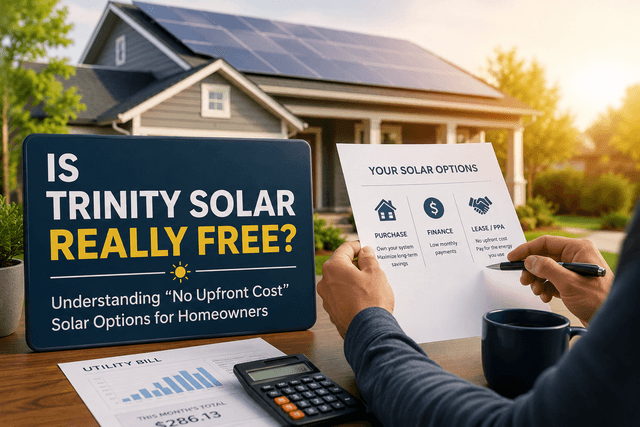
If you are still comparing ownership paths, our article on whether Trinity Solar is really free explains how “no upfront cost” solar offers work.
5. Reduce your environmental impact
Solar panels generate electricity from sunlight. Once installed, they produce electricity without burning fuel or creating emissions during operation.
For homeowners who want to reduce reliance on fossil fuel-based electricity, solar can be one practical step toward a cleaner home energy plan.
Environmental impact may not be the only reason homeowners go solar, but it is often an added benefit alongside lower bills, long-term savings and energy independence.
Are the benefits of solar worth it for everyone?
No. Solar is not the right solution for every home.
The benefits are strongest when a home has suitable roof conditions, good sun exposure, meaningful electricity usage and a homeowner who plans to stay long enough to benefit from the system.
Solar may be a good fit if...
- Your electric bill is consistently high
- Your roof gets good sunlight
- Your roof is in strong condition
- You plan to stay in the home for several years
- You want more predictable energy costs
Solar may need closer review if...
- Your roof needs replacement soon
- Your home has heavy shade
- Your electricity usage is very low
- You plan to move shortly
- You are unsure which payment option fits your goals
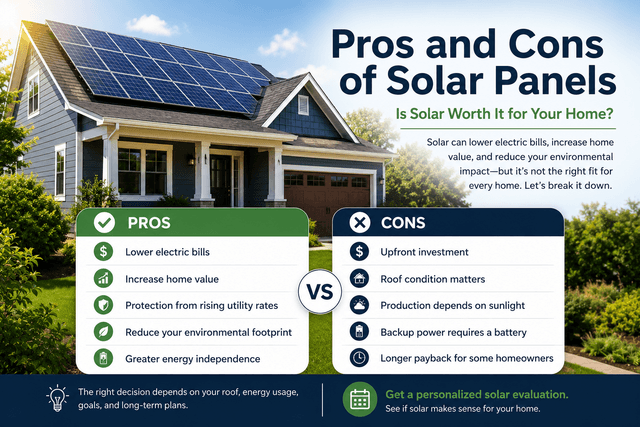
For a balanced comparison, read our guide on the pros and cons of solar panels.
If your roof may need work, our article on replacing your roof before installing solar explains when it may make sense to coordinate roofing and solar together.
How to know which benefits apply to your home
The benefits of solar look different for every homeowner.
A personalized solar evaluation can review your roof, electric usage, available sunlight, utility provider, payment options and long-term goals.
A solar evaluation usually looks at:
- Your average electricity usage
- Your roof age and condition
- Sun exposure and shade
- Available roof space
- State and utility programs
- Your payment preferences
- Your long-term homeownership plans
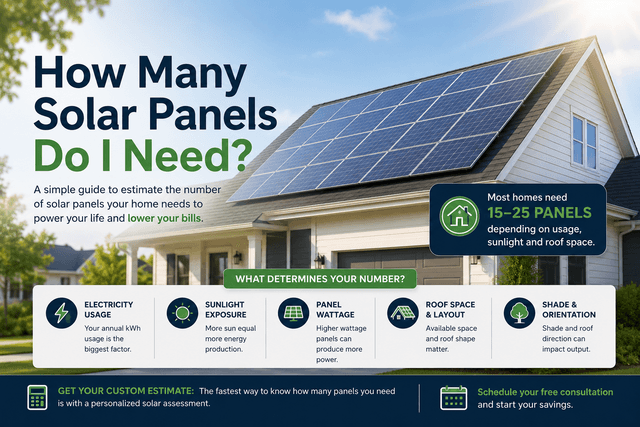
If you are trying to estimate system size, our guide on how many solar panels you need can help.
Final thoughts
Solar panels can offer meaningful benefits for the right home.
They can lower electric bills, reduce exposure to utility rate increases, support cleaner energy and give homeowners more control over how their home is powered.
But the decision should be based on your actual roof, electric bill, payment options and long-term goals.
The real question is not just “What are the benefits of solar?”
The better question is which benefits apply to your home and whether solar makes financial and practical sense for your situation.
Continue learning
If you are exploring the benefits of solar panels, these guides are a good next step: